
The CAB HERMES QL is an industrial Print & Apply system designed for the automatic printing and application of labels made from linerless and InNo-Liner materials. It combines a thermal printer, a material feed system, an automatic cutter, and an applicator. The absence of a traditional label backing reduces waste, increases the amount of material per roll, and reduces the frequency of roll changes.
01/
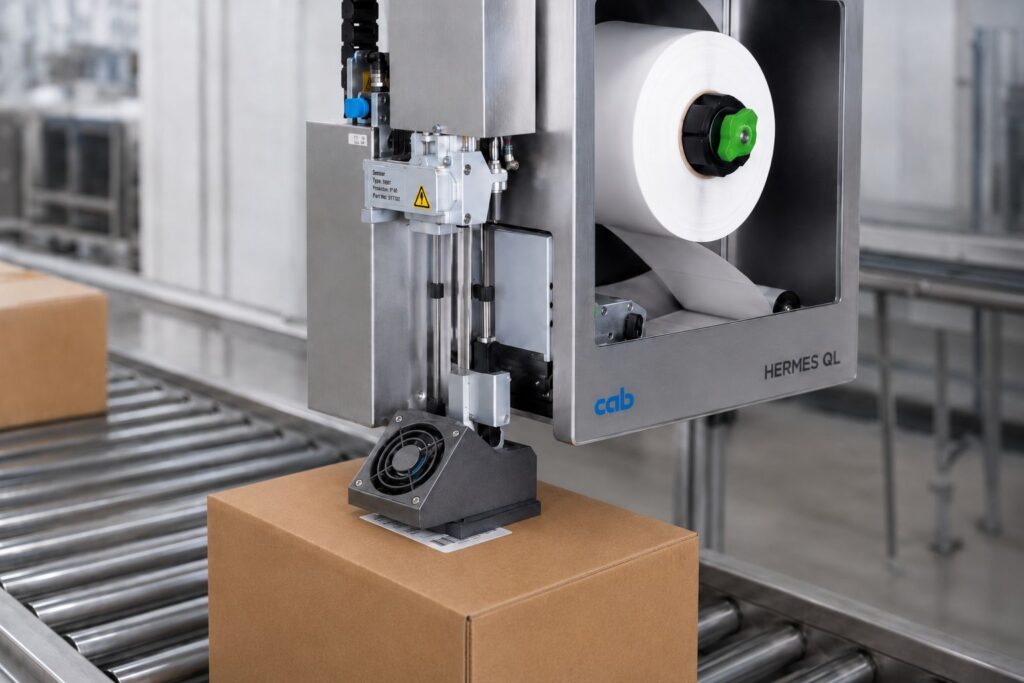
In standard self-adhesive labels, the material is mounted on a silicone backing, which becomes waste after application. The HERMES QL automatic label applicator uses material without a traditional liner.
The label is printed on continuous material, then automatically cut to the appropriate length and applied to the product or packaging. The entire process can take place without operator intervention.
CAB notes that a roll with a diameter of approximately 300 mm can hold as much as about 800 m of linerless or InNo-Liner material, whereas a comparable amount of material on a traditional backing is approximately 450 m. In practice, this means fewer roll changes, shorter downtime, and less material requiring storage and transportation.
HERMES QL is ideal for, among other things, automatically marking cardboard boxes, packaging, parcels, and shipping and logistics labels.
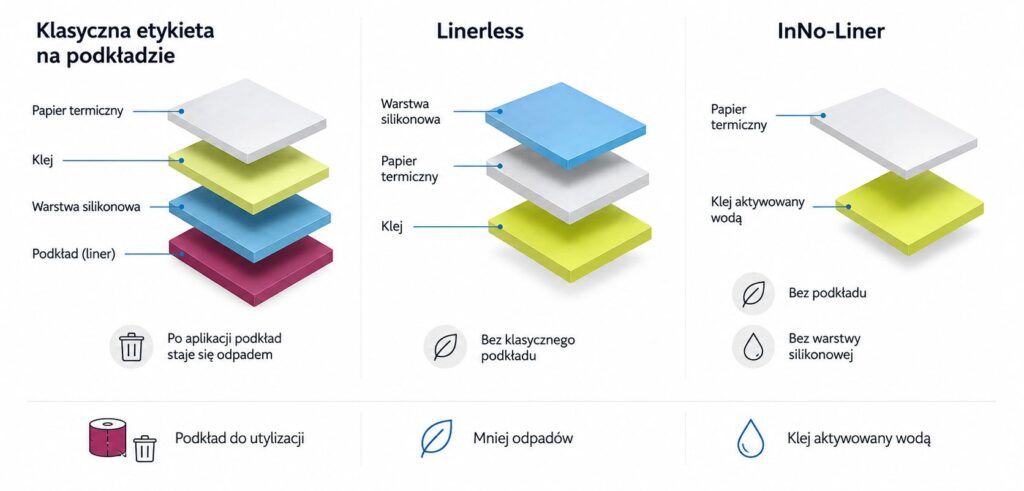
HERMES QL can process two types of materials that do not have a traditional liner.
Linerless materials feature an adhesive layer and a silicone release layer on the label’s surface. They can be used in a wide range of manufacturing, logistics, and packaging processes.
InNo-Liner uses neither a primer nor a silicone layer. The adhesive is water-activated, which is why this solution is primarily intended for absorbent paper and cardboard surfaces—including cardboard boxes and packaging used in logistics.
The choice of technology should therefore be based primarily on the type of surface being marked, the method of application, and the conditions under which the product will be used.
03/
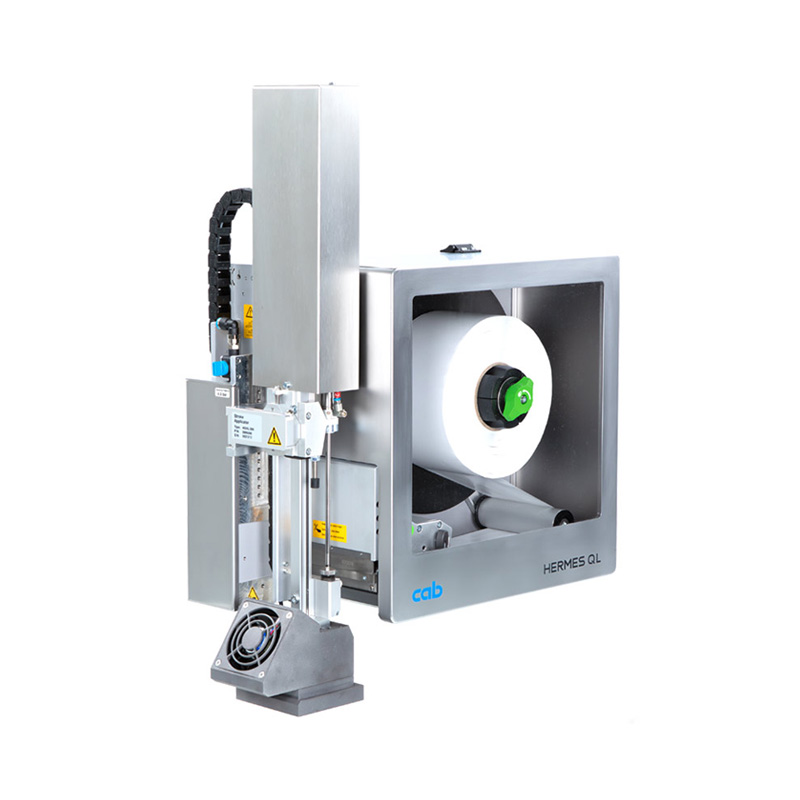
The HERMES QL family includes two basic models that differ primarily in the width of the material they can handle.
| Parameter | CAB HERMES QL4.3 | CAB HERMES QL6.3 |
| Printing method | thermal | thermal thermal |
| Resolution | 200 / 300 dpi | 200 / 300 dpi |
| Max. print speed | 300 mm/s | 250 mm/s |
| Max. print width | 104 / 108.4 mm | 168 / 162.6 mm |
| Max. print length | 13,500 / 9,000 mm | 9,000 / 4,000 mm |
| Material width | 50–118 mm | 50–178 mm |
| Max. material thickness | 84 µm | 84 µm |
| Max. roll diameter | 300 mm | 300 mm |
| Feeding Direction | left / right | left / right |
| Screen | 4.3″ LCD | 4.3″ LCD |
It is a solution designed for standard linerless material formats and can be used in a wide range of manufacturing and logistics applications.
It offers a wider print width and is designed for wider labels and applications that require a larger area for information.
The system’s ultimate performance depends not only on the device model, but also on the type of material, the label length, and the application method.
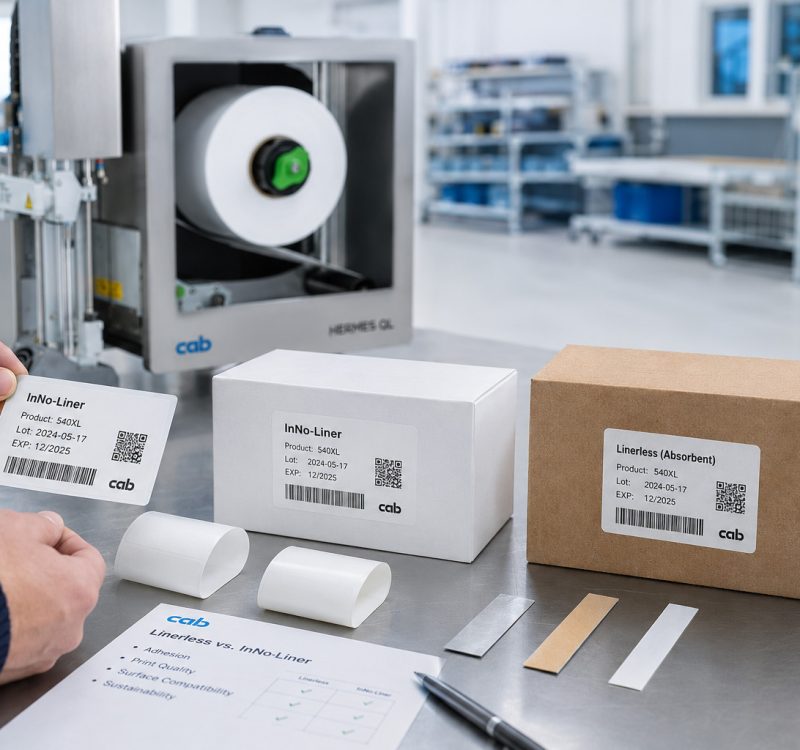
The switch to linerless technology can affect not only the amount of waste generated, but also the organization of the entire labeling process.
The key benefits of HERMES QL are:
Another significant advantage of continuous media is the ability to create labels of various lengths. The system is not limited to a single, pre-cut format—the cutter trims the media according to the current print design.
This allows you to better adjust the label size to the amount of information and reduce unnecessary material waste.
05/
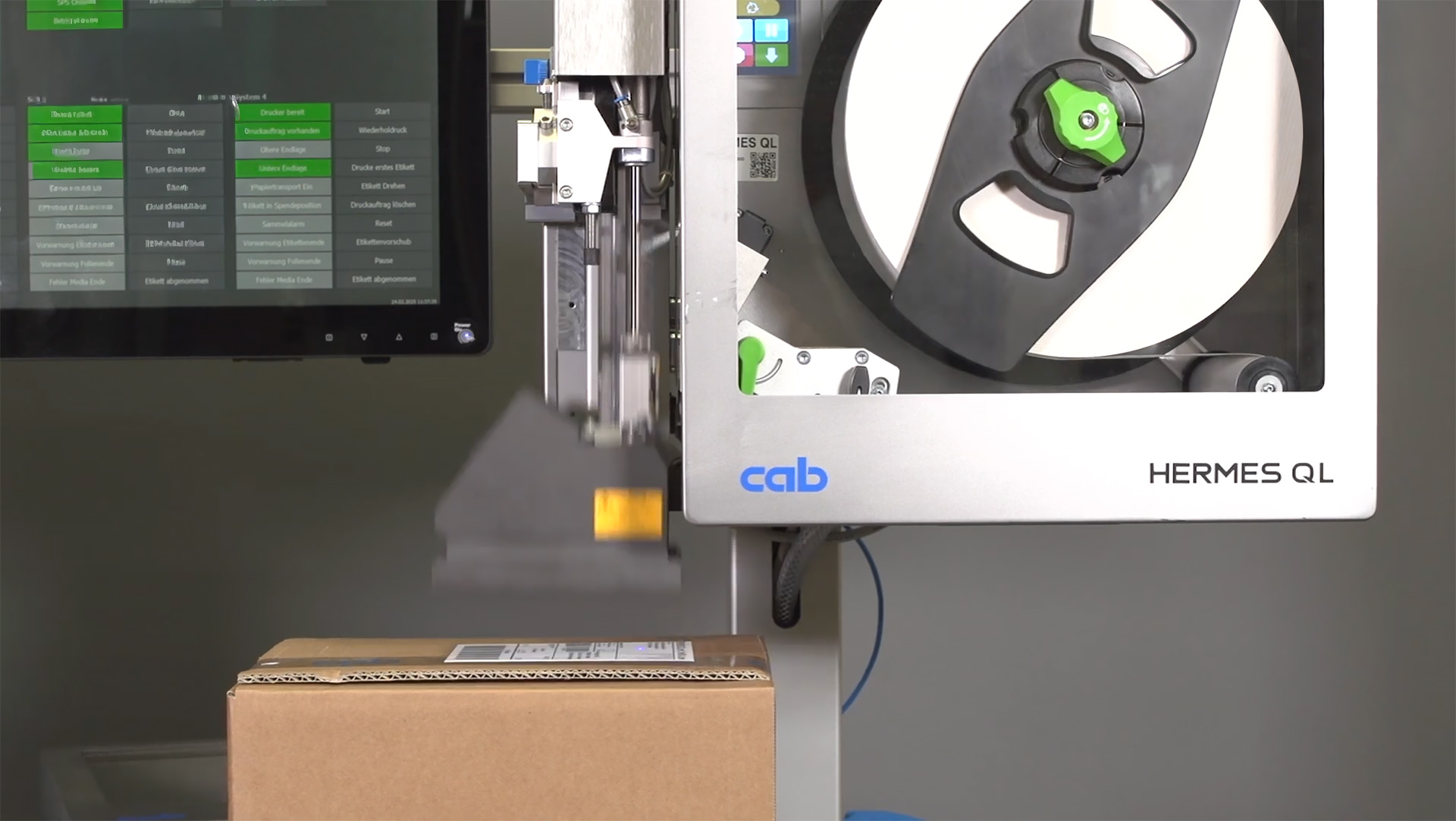
HERMES QL is not just a device that handles linerless material. It is a complete Print & Apply system that automatically cuts the material after printing and feeds the finished label to the applicator.
The cutter is designed to work with self-adhesive materials and features surfaces that reduce adhesive buildup. The module can also be quickly removed for cleaning or maintenance. Depending on the process, HERMES QL can be used with various applicators that allow labels to be applied, for example, from the top, side, or corner of the package, as well as to products in motion.
For InNo-Liner materials, configurations are used that are designed to activate the adhesive with water and apply the label to the appropriate paper or cardboard surface. As a result, the system can be used both in standalone automatic marking stations and on integrated production, packaging, and logistics lines.
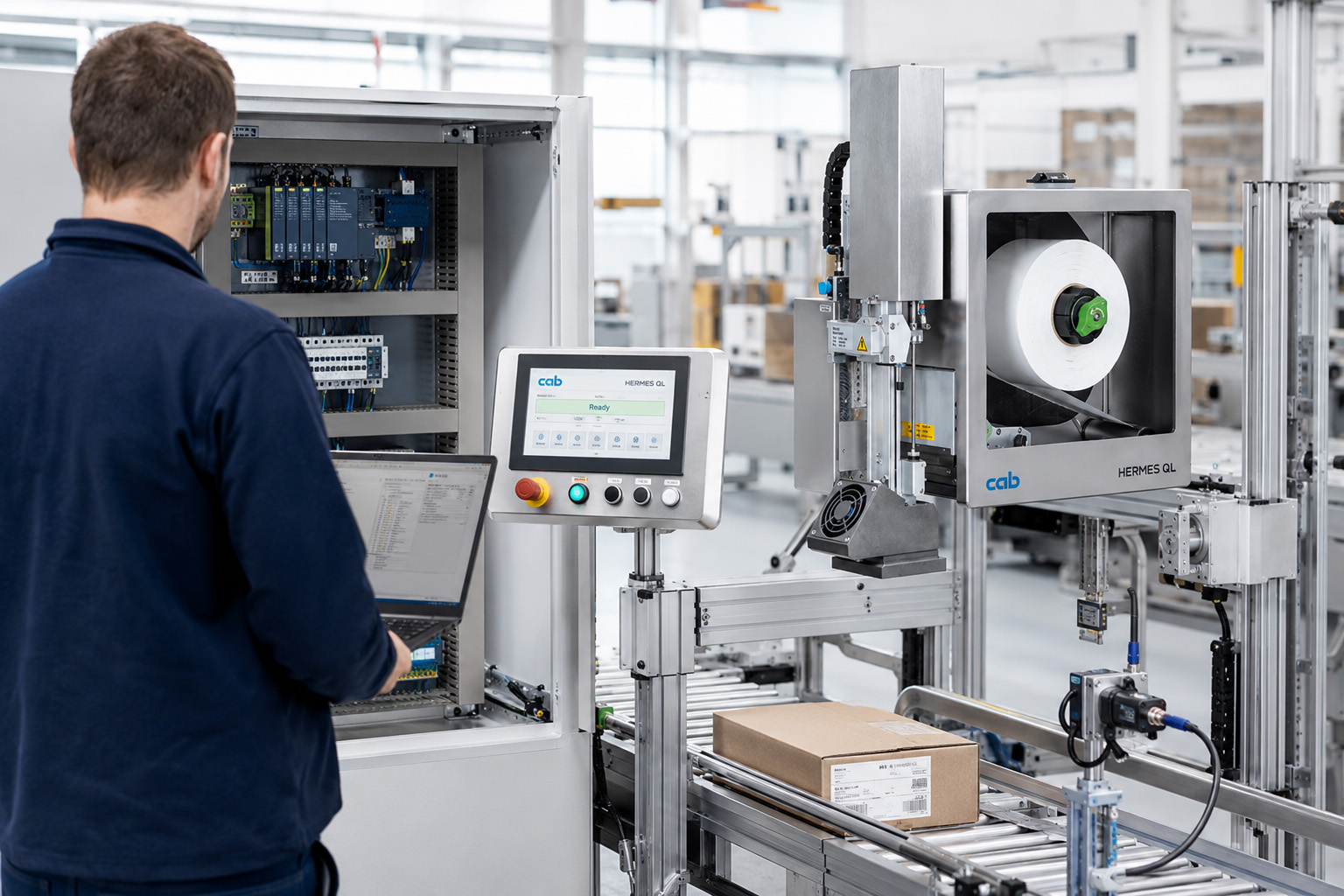
The CAB HERMES QL uses the control platform familiar from the HERMES Q family and can be directly integrated into the line’s automation system.
The device is equipped with, among other things, Ethernet, RS232C, USB, and a digital I/O interface, enabling communication with PLCs and peripheral devices.
The system can receive signals regarding the start of printing and application, the suspension of the process, or the feeding of the next roll of material, while simultaneously transmitting information about the device’s readiness, the end of the material, and any errors that occur.
HERMES QL can also communicate with host systems (e.g., WMS) and databases, allowing labels to include up-to-date data from production, logistics, or warehouse processes.
Operation and diagnostics are performed via a 4.3″ color touchscreen. If access to the device is difficult, an external operator panel can also be used.
07/
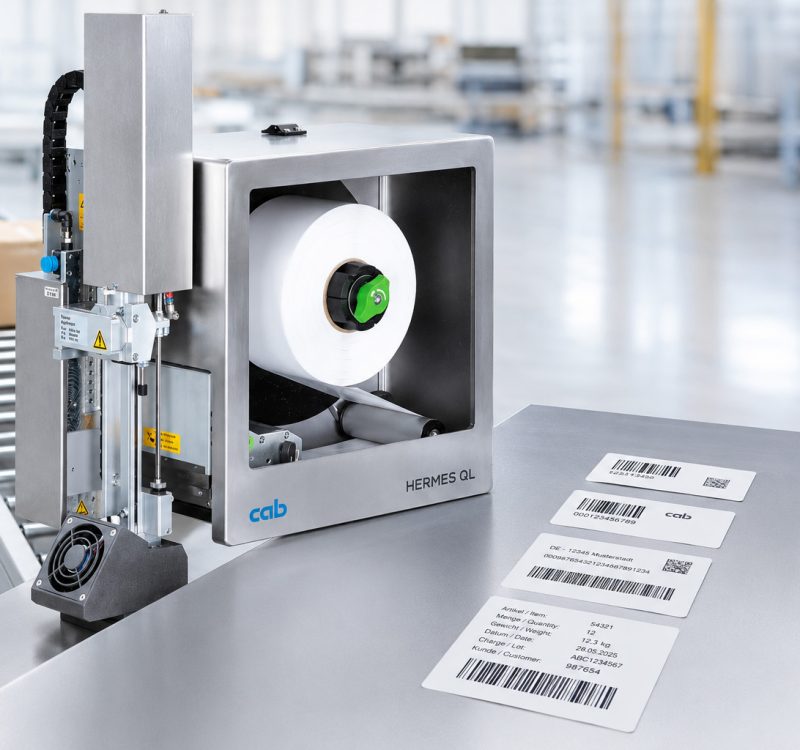
The selection of a configuration should begin by answering a basic question: What material will be used, and on what surface will the label be applied?
For linerless materials, the most important factors are the label’s width and length, the type of adhesive, the required print width, the line speed, and the application method.
When using InNo-Liner technology, additional considerations include surface absorbency, the type of paper or cardboard, the method of activating the adhesive with water, and the selection of the appropriate applicator and material-guiding components.
The following are also important:
For non-standard materials or challenging applications, it is advisable to conduct tests on actual products before implementation.
HKK Group can help you evaluate both the proper configuration of the equipment and the feasibility of switching from traditional labels to linerless or InNo-Liner technology.
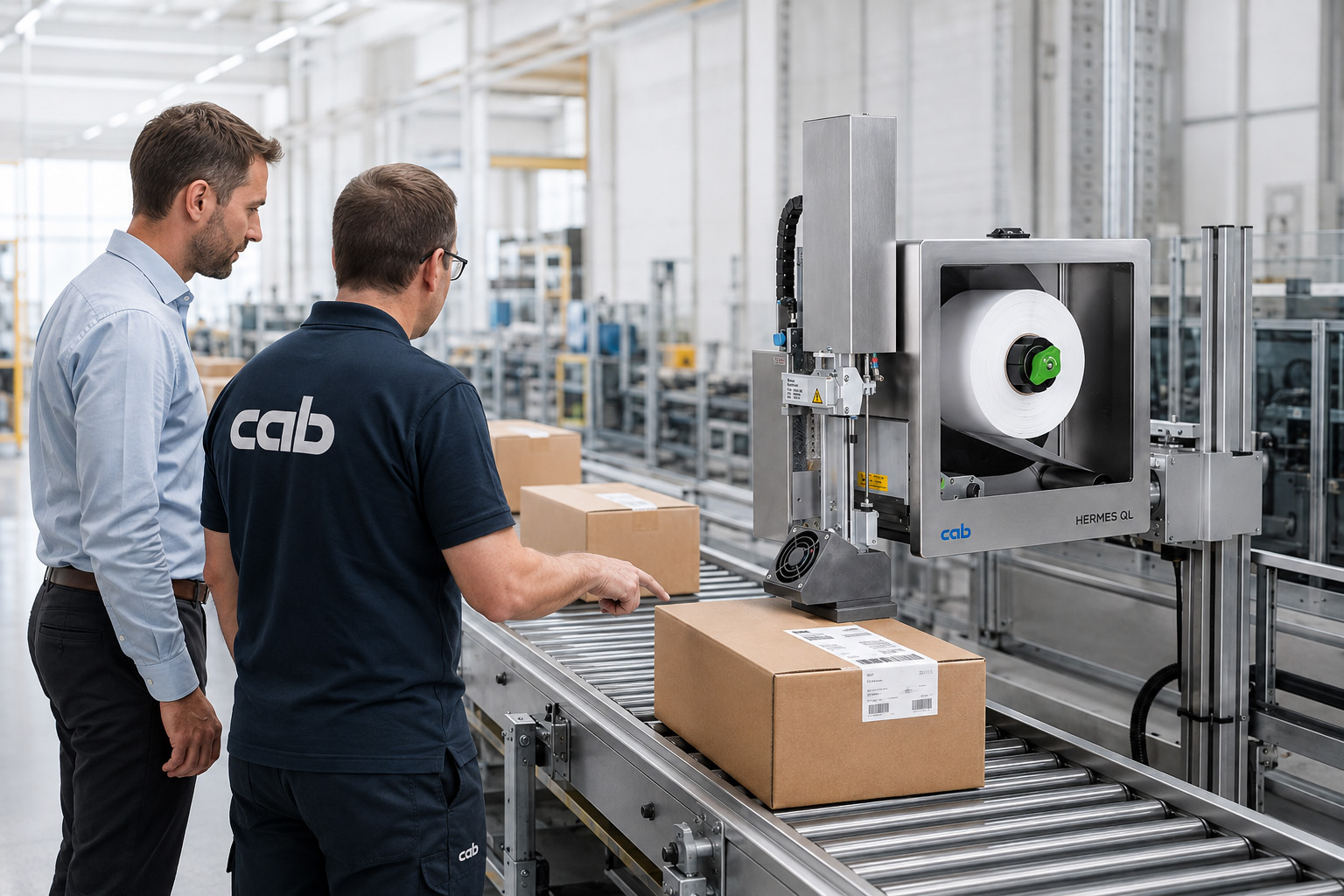
Are you planning to use linerless or InNo-Liner materials for automatic labeling?
Contact an HKK Group consultant. We’ll help you choose the right CAB HERMES QL model, label material, applicator, installation method, and integration with your production line automation.
We can also determine whether using technology that does not require a traditional backing will help reduce waste, the frequency of material changes, and the costs associated with the labeling process.