

Two-color label printers allow for the application of two colors in a single printing process. This makes it possible to highlight warnings, symbols, borders, and other information that should be immediately visible to the user. This solution is used, among other things, in the chemical and pharmaceutical industries, in the production of paints, varnishes, and detergents, for labeling hazardous products, for GHS-compliant labeling, and in logistics and industrial manufacturing.
01/
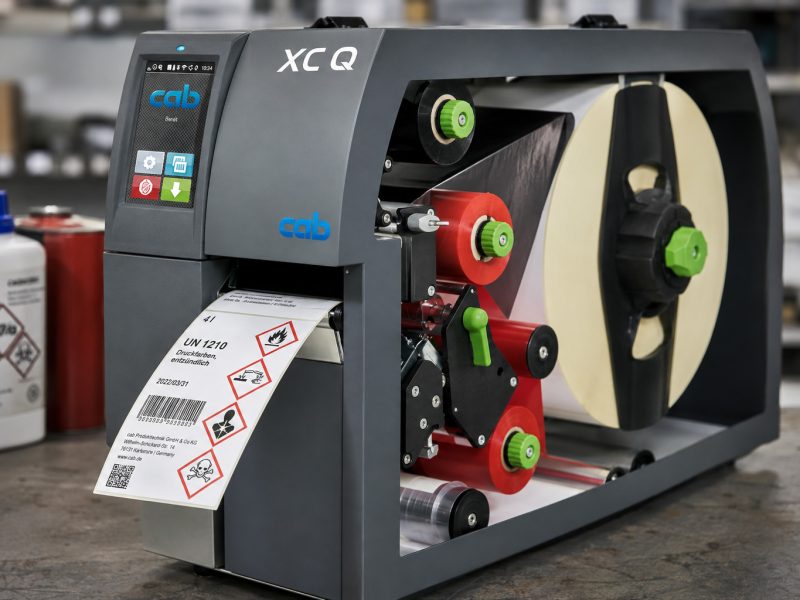
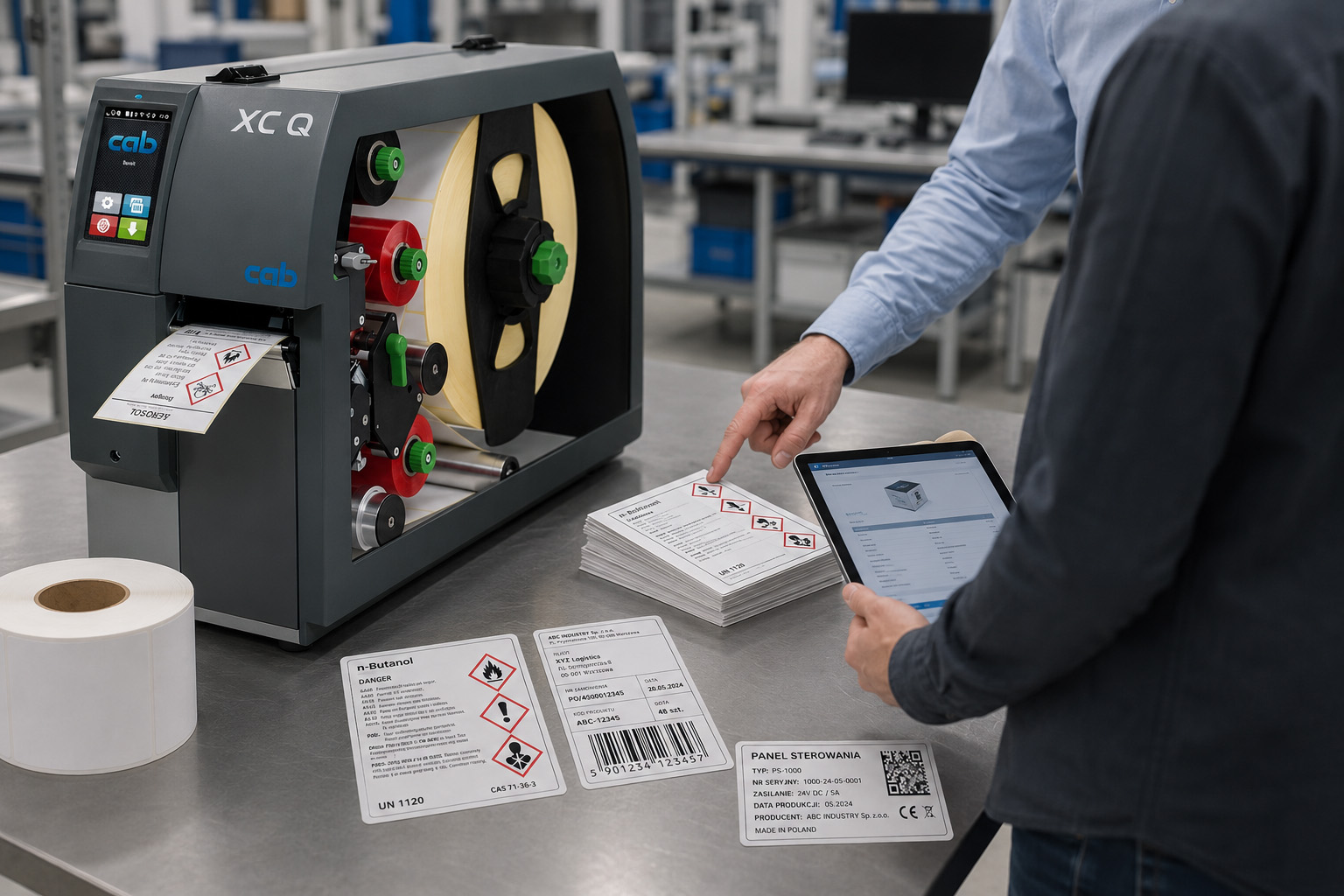
CAB XC Q label printers use two thermal transfer print heads positioned sequentially along the media path. Each head works with a separate ribbon—the first applies one color, and the second adds elements printed in the second color to the label.
The entire label is produced in a single pass of the material through the machine. There is no need to re-feed the label or use materials with pre-printed color designs.
The temperature of each print head can be adjusted independently. This allows you to tailor the process parameters to the type of material, the properties of the thermal transfer ribbon, and the color being used.
If a specific task requires the use of only the second print head, the first one can be automatically raised. The printer then also stops the feed of the thermal transfer ribbon assigned to that print head, thereby reducing unnecessary ribbon wear.
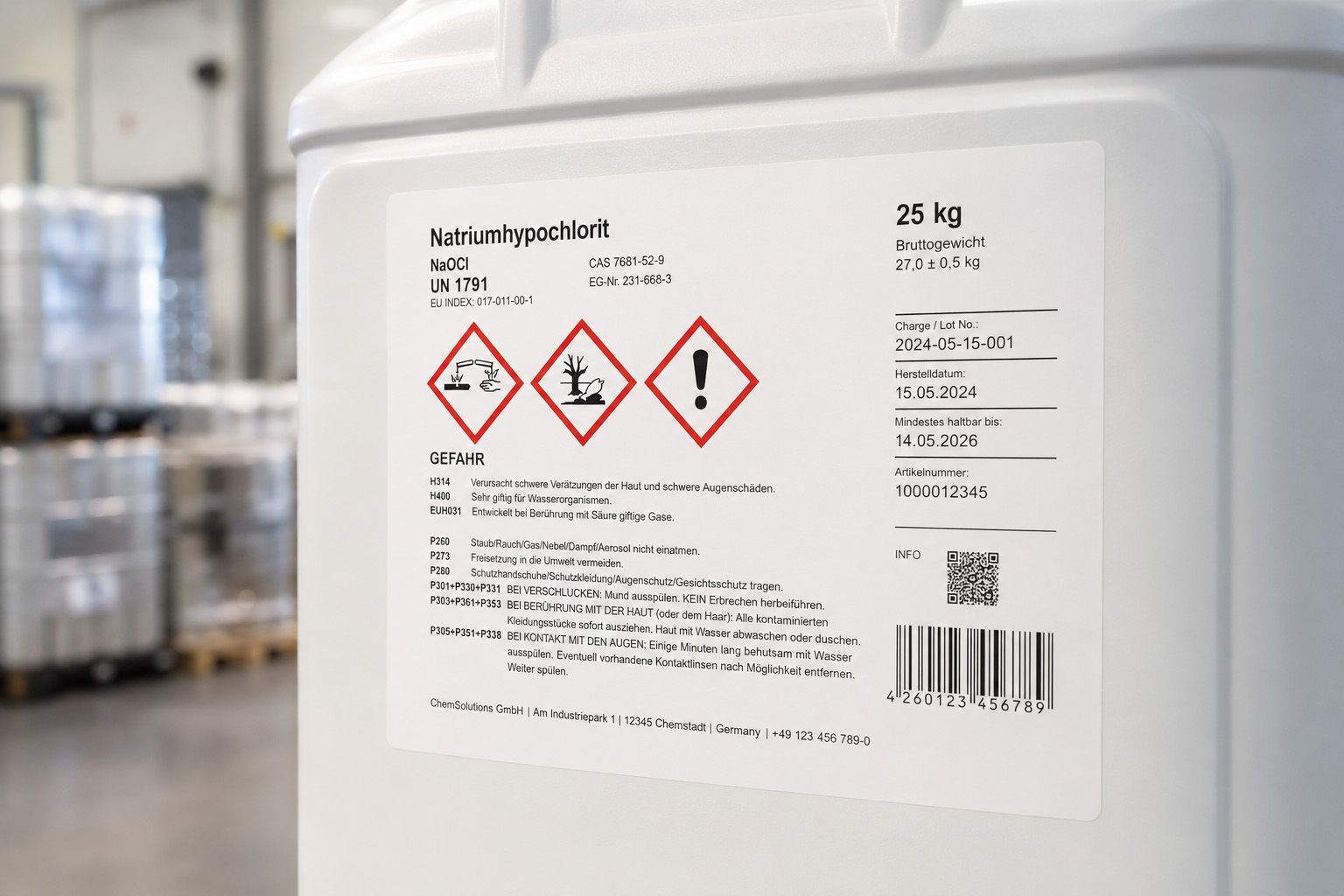
One of the most important applications of CAB XC Q printers is the production of labels for chemical substances and mixtures. GHS-compliant labeling uses distinctive warning pictograms with a red border and a black symbol on a white background.
Two-color printing allows you to produce a complete label directly at the facility. A single process can generate red pictogram borders, black warning symbols, substance names, hazard and safety information, manufacturer details, lot numbers, and barcodes and 2D codes.
The label content can be generated immediately before printing and may include variable data. This makes it easier to customize the label for a specific product, production batch, packaging type, or required language version.
CAB XC Q can also be used for other applications where color serves an informational or warning purpose—for example, on product, logistics, and industrial labels.
03/
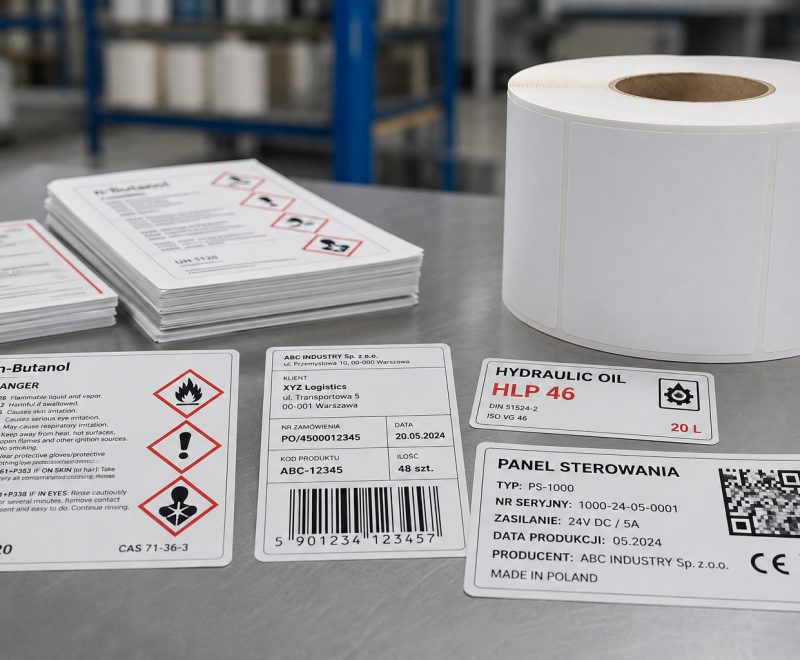
Printing two colors directly at the production station provides greater flexibility than using labels with pre-printed color designs.
The key benefits of this solution are:
The CAB XC Q can process labels and continuous media wound onto a roll. Supported substrates include, among others , paper, cardboard, synthetic materials, PET, PE, PP, PI, PVC, PU, acrylic materials, and Tyvek. The XC Q4 model can also be used to print on select textile tapes.
For unusual, thick, stiff, or highly adhesive materials, we recommend conducting tests in advance.
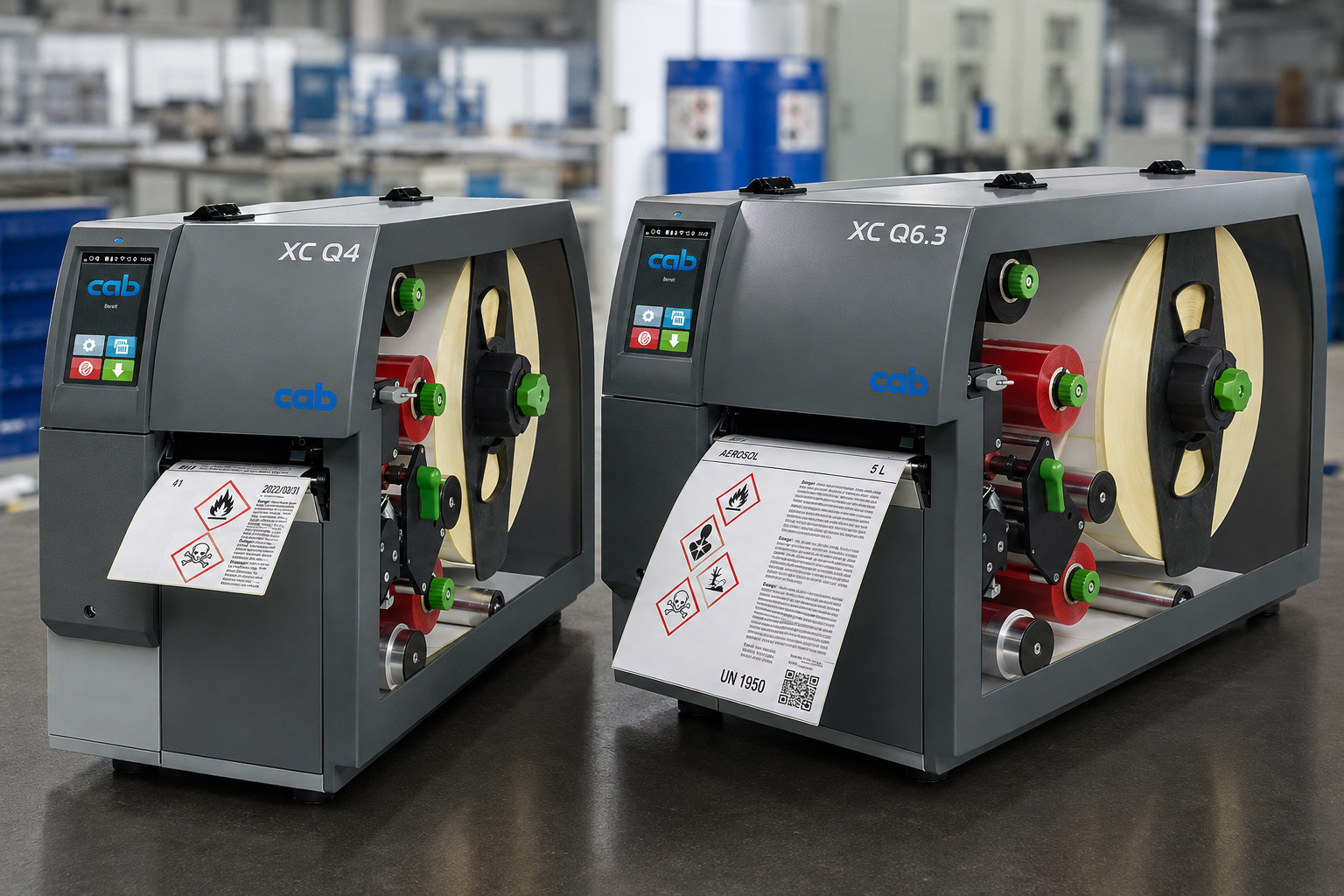
The CAB XC Q family includes two models that differ primarily in their maximum material and print widths.
|
Parameter |
CAB XC Q4 |
CAB XC Q6.3 |
|
Printing Technology |
thermal transfer |
thermal transfer |
|
Number of print heads |
2 |
2 |
|
Resolution |
300 dpi |
300 dpi |
|
Maximum print speed |
150 mm/s |
150 mm/s |
|
Maximum print width |
105.7 mm |
162.6 mm |
|
Maximum material width |
114 mm |
180 mm |
|
Label width |
20–116 mm |
46–176 mm |
|
Minimum label height |
10 mm |
10 mm |
|
Maximum print length |
3,000 mm |
2,000 mm |
|
Maximum length of the color ribbon |
450 m |
450 m |
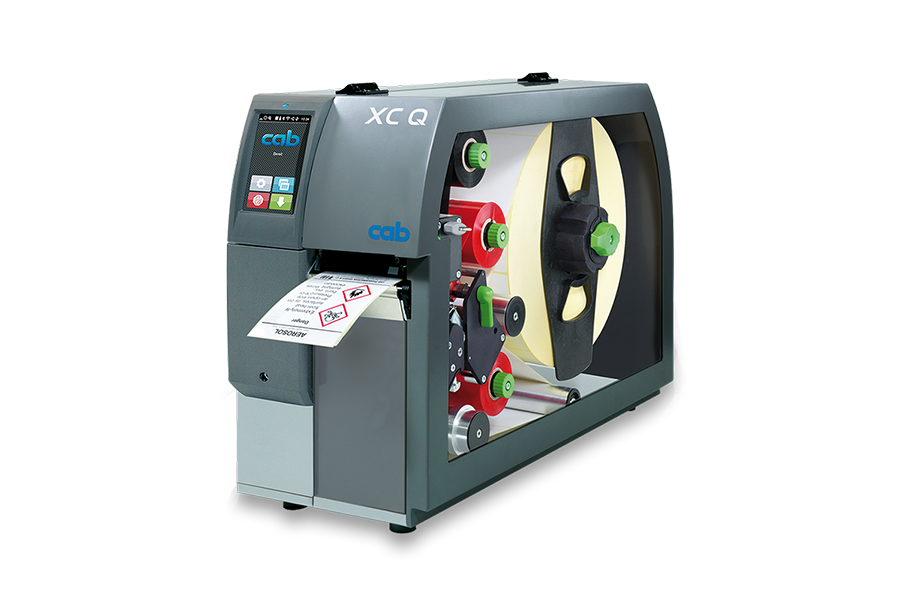
The CAB XC Q4 model is designed for labels up to 116 mm wide and offers a maximum print width of 105.7 mm. It is ideal for, among other things, producing labels for containers holding chemicals, individual and bulk packaging, product, logistics, and warning labels, as well as GHS-compliant labels.
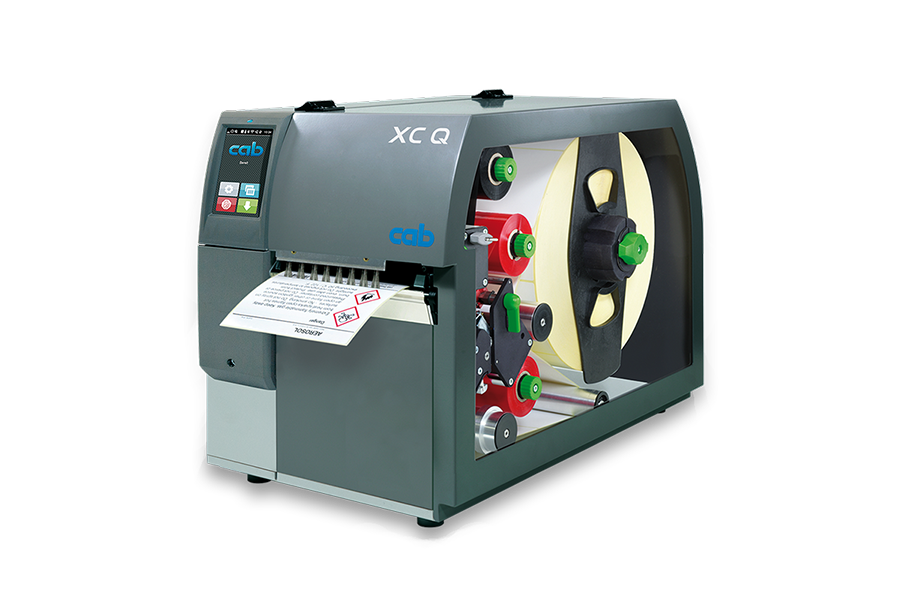
The CAB XC Q6.3 supports materials up to 180 mm wide, and the maximum print width is 162.6 mm. This model is designed for applications requiring larger label formats—such as labeling large containers, barrels, canisters, bulk packaging, and chemical raw materials.
The larger surface area allows for the inclusion of several pictograms, detailed safety information, identification data, and codes on a single label.
05/
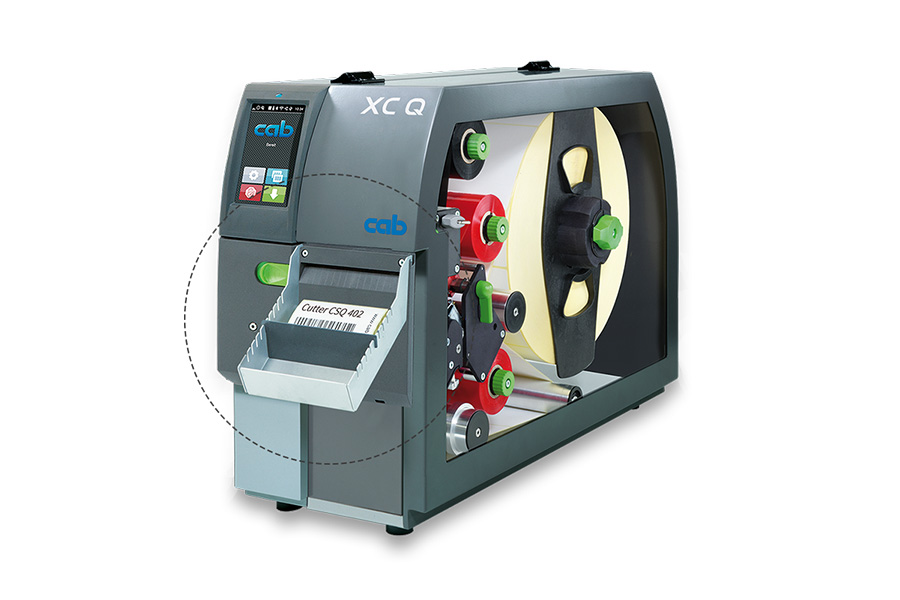
The CAB XC Q can be expanded with accessories that allow you to tailor the way labels are retrieved and further processed to a specific process.
Available solutions include , among others , the CSQ402 cutter for the XC Q4 model and the CU600 cutter for the XC Q6.3, the CU400 cutter recommended for textile applications, a collection tray, external winders, a guide for accordion-folded materials, an external control panel, and a digital I/O interface.
The I/O interface allows printing to be triggered by a PLC, a sensor, or a manual button. It also enables the transmission of information about the device’s operating status and any errors that occur, allowing the printer to be integrated into a more complex production or packaging process.
Choosing the right CAB XC Q model depends primarily on the label width, the type of material being printed, the required color combination, and the number of labels produced per day.
It is also important to consider the type and expected lifespan of the thermal transfer ribbons, GHS labeling requirements, the need for automatic cutting or rewinding of the material, the method of integration with the host system, and the conditions at the installation site.
It is also important to ensure that the label is properly matched to the ribbon used. Before implementation, we can conduct tests using materials provided by the customer.
Contact an HKK Group consultant. We’ll analyze your application and help you select the right CAB XC Q model, consumables, and configuration tailored to your process.