
Shortcuts
- Top/Deck Loader AMR vs. Forklift AMR/AGV
- What are AMR platform autonomous robots?
- Key features of AMR’s top/deck loader:
- Why isn’t it always a good idea to start with autonomous forklifts?
- Limitations of AMR/AGV autonomous forklifts
- Key Advantages of Top/Deck Loader AMR
- Where does the top/deck loader perform best?
- Highlights
Top/Deck Loader AMR vs. Forklift AMR/AGV
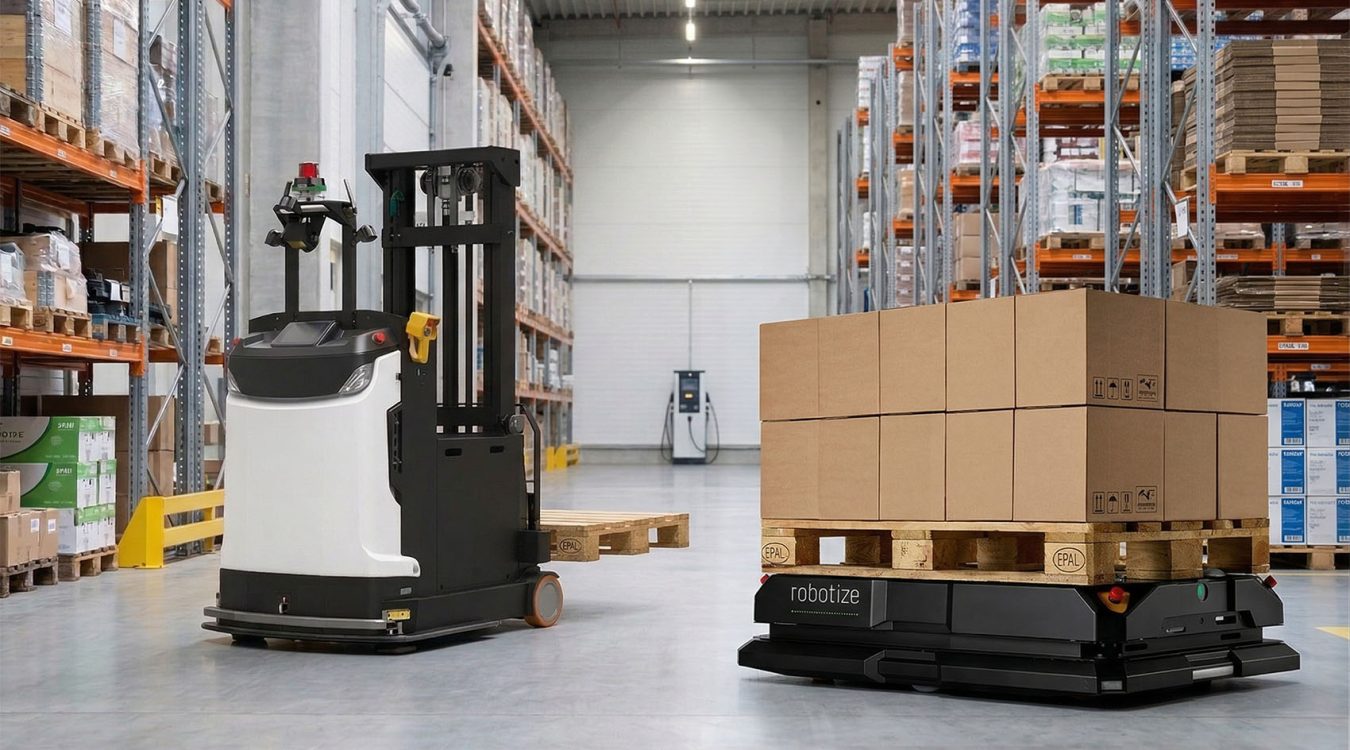
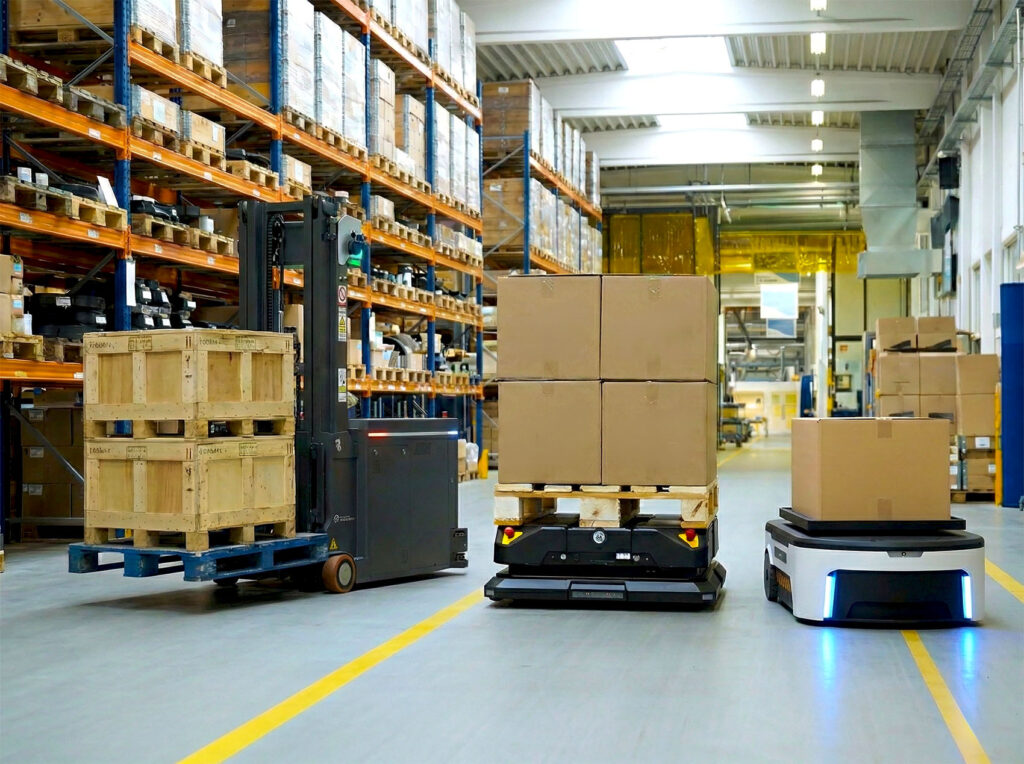
Automating material handling in a warehouse increasingly means choosing between autonomous forklifts (AMR/AGV) and top/deck loader robots, such as the Robotize GoPal.
From the point of view of safety, cost and speed of deployment, AMR’s top/deck loader – or platform robot – is proving to be a more effective solution than classic forklift-equipped autonomous trucks in many projects.
What are AMR platform autonomous robots?
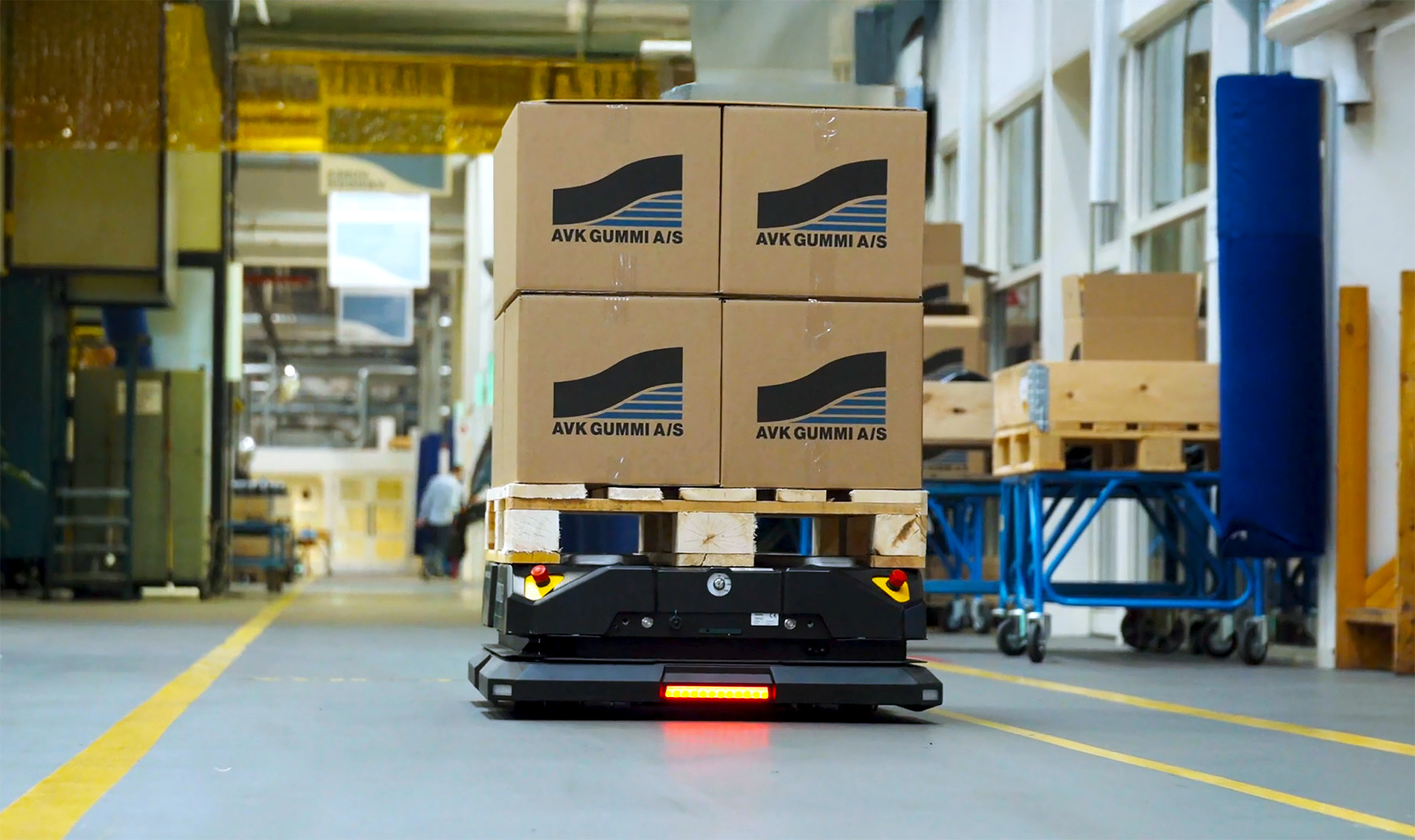
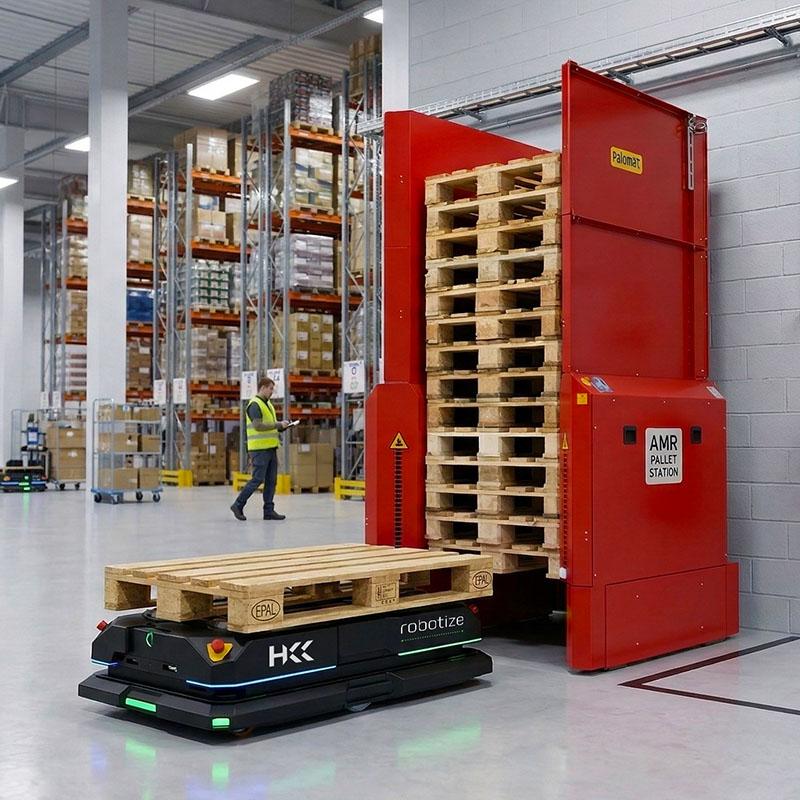
Top/deck loader AMRs are autonomous mobile robots that retrieve pallets or loads from above – from a conveyor, a loading bay or a special platform. In practice, they fit very well into warehouse logistics processes and the automation of horizontal transport between receiving areas, production buffers, packaging lines and shipping.
Key features of AMR's top/deck loader:
- Picking and depositing pallets from the top, with no forks entering from the front,
- Standalone operation with the possibility of integration with WMS and warehouse automation systems,
- Fit for 24/7 operation in repetitive pallet transport processes.
Why isn't it always a good idea to start with autonomous forklifts?
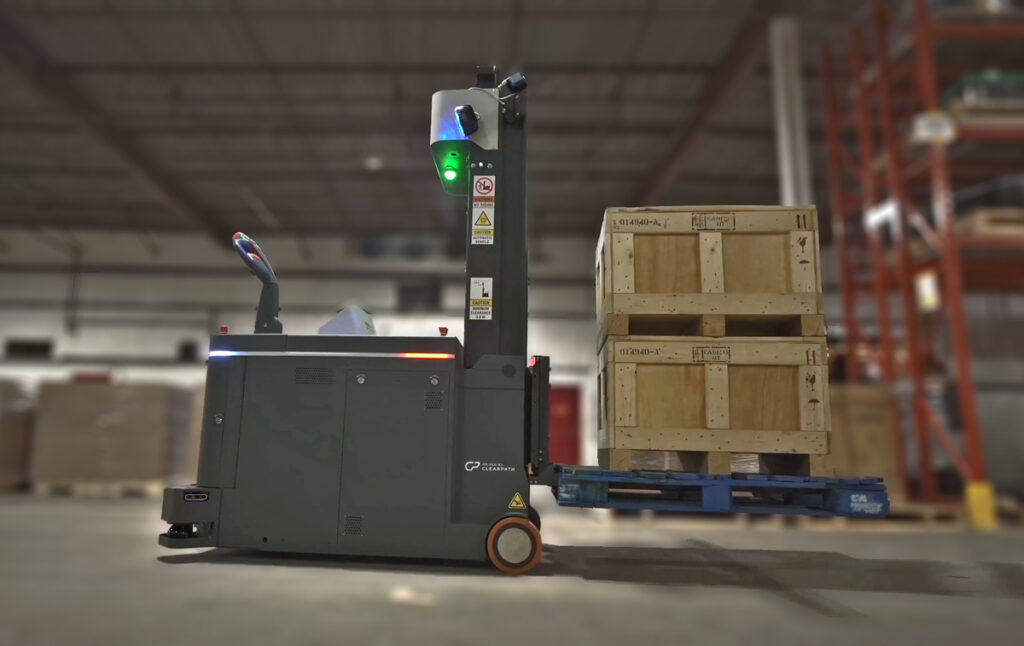
AMR/AGV autonomous forklifts are sometimes seen as a natural choice, especially for pallet handling. However, experience has shown that they often require additional infrastructure changes and generate a higher risk of collisions in dynamic work environments.
Limitations of AMR/AGV autonomous forklifts:
- The need for wider alleys or infrastructure changes to maintain safety,
- higher risk of collision due to the height of the load and the mechanics of the work,
- greater structural complexity than AMR’s platform robots.
Key Advantages of Top/Deck Loader AMR
Higher security and stability
Platform (top/deck loader) trucks pick up the load from the top, reducing the risk of tipping and instability that can occur in forklift solutions – especially with tall loads. This design reduces incidents and damage to goods, supporting the safety of warehouse operations.
Simpler design and lower maintenance costs
AMR top/deck loaders have fewer moving parts than AMR/AGV forklifts, resulting in lower service requirements and less risk of downtime. This is important where continuity of operation and predictability of logistics automation costs are key.
Compact design
Top/deck loaders work in less space than forklift solutions because they do not require space to maneuver the forks. This makes them suitable for warehouses with limited space and high storage density.
Lower cost of implementation and faster ROI
Top/deck loader AMRs are often more cost-effective than forklift AMRs/AGVs, while maintaining high efficiency in transporting heavy loads. This investment model accelerates the return on implementation of warehouse automation.
Where does the top/deck loader perform best?
There are several environments in which the AMR top/deck loader is particularly effective – primarily where horizontal transport, repeatability and integration with existing infrastructure are prevalent.
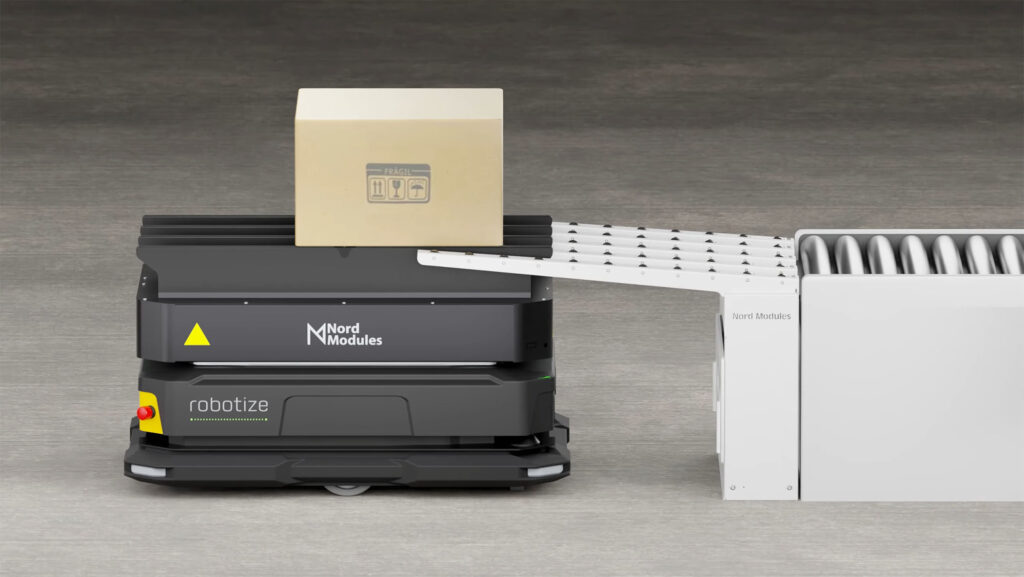
- integration with conveyors,
- rack-to-rack transport,
- Moving material without the need for lifting to different heights,
- operations geared toward maximizing throughput in horizontal transportation.