

RFID from the ground up - what is the technology?
RFID (Radio Frequency Identification) is a contactless radio frequency identification technology that enables fast and accurate recognition of objects. Although it is not new – the first attempts to use radio waves to identify aircraft took place as early as World War II – today RFID is returning to favor as a key component of modern automatic identification and warehouse logistics systems.
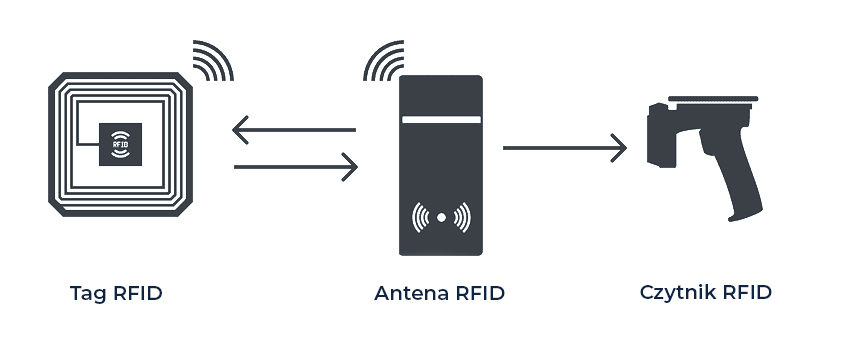
RFID system consists of three basic components:
RFID reader,
identification chip (tag),
The computer system that controls the readings.
An RFID reader emits radio waves that activate a chip embedded in a label or durable medium, such as an identification tag or lozenge. The data stored in the chip is then read and transmitted to the system. It is the system that is responsible for the reading logic – initiating specific actions or generating reports based on the acquired data.
Physical contact between the tag (e.g., an adhesive label) and the reading device is not required for operation.

Where is RFID worth applying?
RFID is used wherever speed, precision and control of assets are crucial. The technology is ideal for:
High-value products such as clothing, jewelry or electronics,
inventory of fixed assets Without the need for physical contact with the items,
management of reusable packaging,
Monitoring production processes – especially in the automotive industry,
marking of outdoor facilities and infrastructure.
RFID is increasingly becoming an integral part of modern WMS systems i warehouse automation, supporting the development of the concept of digital twin and comprehensive automatic identification (Auto ID).
RFID vs barcodes - key differences
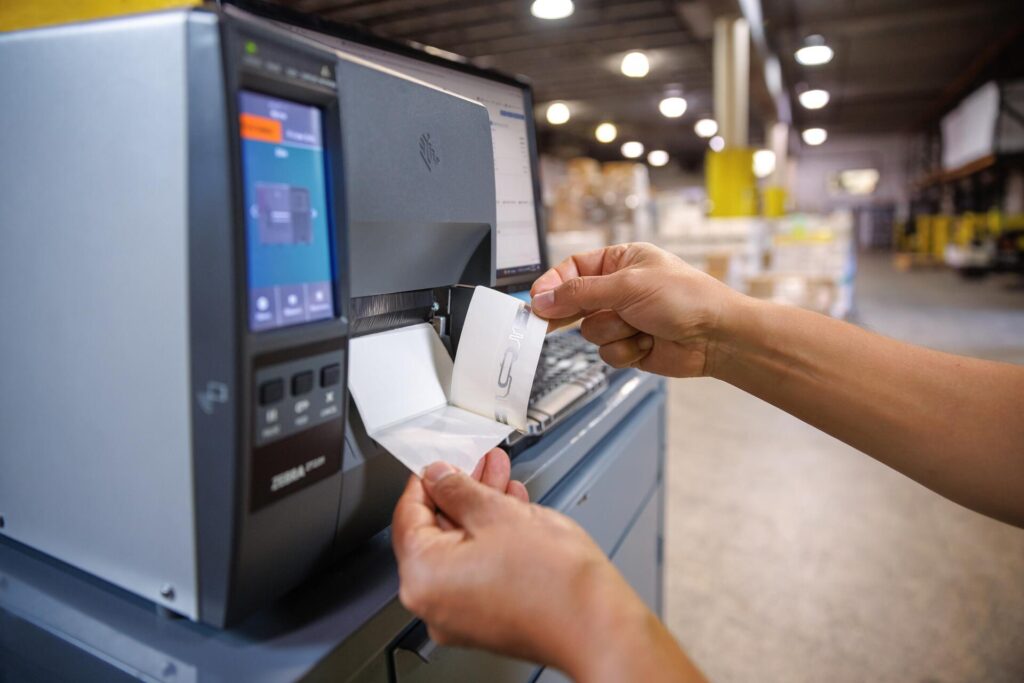
RFID technology is sometimes seen as an alternative to barcodes, although in practice it more often complements them. This is primarily due to cost – RFID tags are many times more expensive than traditional barcode labels, which limits their mass adoption.
Nevertheless, RFID offers a number of technological advantages:
Reading without physical contact with the product,
The ability to read multiple tags simultaneously,
Reading range of up to 5 meters (for UHF technology).
Thanks to these properties, RFID makes it possible to significantly speed up logistics processes and improve their accuracy.
The old-fashioned barcode and 2D codes - the future is still ahead of them
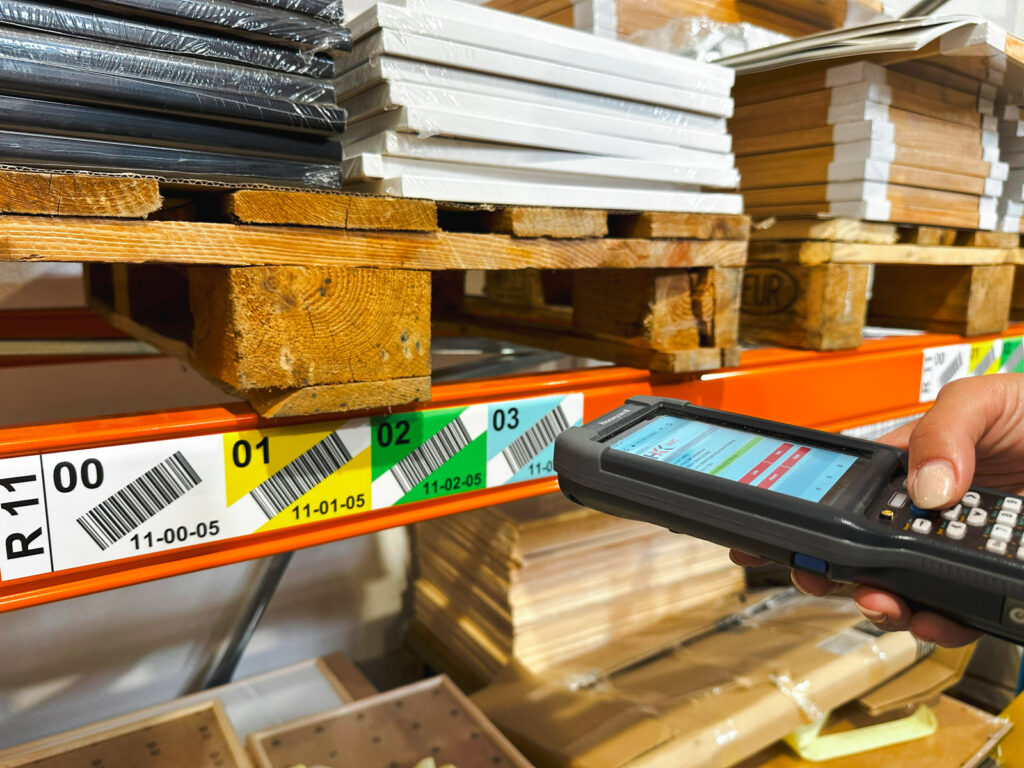
The most popular method of data collection remains barcodes and two-dimensional (2D) codes – and there are many indications that this will not change for a long time to come. Reading requires optical contact between the code and the reader. Although the reading itself can be done from a greater distance (even several meters), this usually involves specialized equipment.
A limitation of this technology is that a standard reader can only read one code at a time. Although there are solutions based on image analysis that partially solve this problem, this is still an advantage of RFID. In contrast, the biggest advantages of barcodes are their ubiquity, very low implementation costs and minimal operating costs.

Costs of RFID and barcode technology
The cost of implementing both technologies is similar – both require hardware infrastructure, including readers and, in the case of RFID, antennas. The key cost difference is revealed in operation.
RFID tags, regardless of their form (disposable or reusable tags), are significantly more expensive than standard self-adhesive barcode labels. This makes RFID unlikely to replace common barcodes, but, in our view, a complementary addition to them.
The biggest advantages of RFID are the ability to read multiple tags simultaneously (even several hundred) and a significant reading range – even several meters in UHF technology. Limitations, however, arise in harsh physical conditions, such as the presence of water or metal, which can interfere with the reading.