


Shortcuts
- WMS as the foundation of modern warehouse logistics
- Growing customer expectations and market demands
- Why is the end of the year the best time to decide on a WMS?
- How do you choose a future-proof WMS?
- What will accelerate the growth of the WMS market?
- WMS cloud hosting, web solution or maybe on demand?
- Highlights
- Learn about our WMS in 3.5 minutes

WMS as the foundation of modern warehouse logistics
WMS systems have been gaining popularity for many years, not as a trend, but as a necessity due to increasing pressure for speed, accuracy and transparency of warehouse processes. The dynamic growth of e-commerce and customers’ expectation of immediate information on order status make traditional warehouse management no longer scalable.
The WMS warehouse program is used to manage all operations in the area of warehouse logistics. These operations include, in particular:
- warehouse receipt area
- storage area of the goods in the warehouse
- area of release of goods to the customer
The operation of the warehouse system is supported by barcode technology, thanks to which it is possible to quickly and flawlessly determine what goods in the warehouse we are dealing with and instantly determine in which location the goods should be located. A modern WMS system makes it possible:
Full control over the movement of goods,
Eliminating picking errors with pick by voice or mobile terminals,
Automation of label printing or automatic application,
Integration with warehouse automation, RFID, and auto ID devices,
Handling e-commerce processes with high precision.
It’s a strategic part of the supply chain today, without which scaling the business becomes risky.

Growing customer expectations and market demands
The year 2024/2025 has brought further changes in consumer behavior: shorter SLAs, higher order volumes and greater demand volatility. Companies that do not have adequate IT infrastructure in the warehouse face:
downtime due to human error,
The inability to respond quickly to spikes in demand,
rising labor costs,
Lack of transparency and data for decision-making.
WMS eliminates these barriers by providing real-time data, allowing better resource planning, creating a digital twin warehouse, and automating repetitive activities.
In the future, a WMS class system can be fed with a powerful amount of data and variables, on the basis of which decision-making will be faster and more accurate compared to traditionally shaped systems.

Why is the turn of the year the best time to decide on a WMS?
1. optimal budget planning
Companies are analyzing their operational performance and needed investments right now. The purchase and implementation of a warehouse system – from process analysis(logistics consulting) to the launch of the solution – is a project worth planning in advance.
2. realistic possibility of implementation at the start of the new season
WMS implementations, especially the elaborate Blue Yonder WMS class systems, take several months to a year, depending on the complexity of the processes and warehouse automation. The decision in the winter means operational readiness before the sales peak.

3. increasing pressure for digitization
More and more companies are declaring that digitization of the warehouse has become a strategic priority, not an add-on. Without automatic identification (RFID, scanners, self-adhesive labels), without product dimensioning, without systemic picking management, it is difficult to remain competitive.
4. a WMS is a future-proof investment
The market is changing rapidly – automation, robotics, vision systems, or digital twin solutions are developing at a record pace. A good WMS must be a foundation that:
Integrates with warehouse automation,
supports new auto ID technologies,
scales with the business.

How do you choose a future-proof WMS?
A forward-looking system is one that:
has an open architecture and API,
Works with auto ID devices and logistics automation,
Has a stable development roadmap (e.g., Blue Yonder WMS),
- provides advanced reporting and analytics,
supports solutions for retail, omnichannel and e-commerce.
It’s an investment that affects the entire organization – from IT to production to warehouse operations. If the warehouse is operating at capacity, the number of errors is increasing, the volume of orders handled is becoming difficult to manage, and processes need to be digitized – yes, this is a good time.
What will accelerate the growth of the WMS market? Automation for logistics
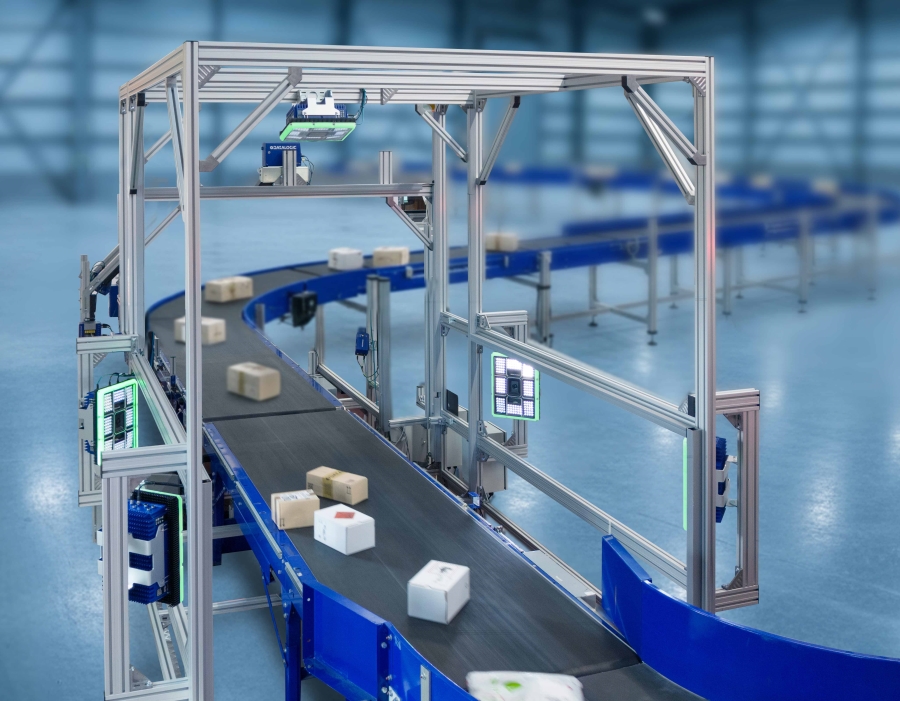
Growing labor shortages among warehouse workers are driving up the cost of hiring them. An effective remedy for such challenges is investment in logistics automation. It makes it so that often repetitive activities performed by employees can be ceded to AMR robots, for example. However, such complex systems need to be skillfully managed, which is done from the level of the WMS system, which is integrated with automation elements in a way that is unnoticeable to operators.
In addition to the development of elements that automate warehouse logistics processes, the following are also of great importance development of elements of artificial intelligence, which can be used in logistics. In particular, we are talking about the almost infinite possibilities of investigating events on the warehouse floor or at any other stage of the supply chain, mainly through the use of readers, sensors, sensors, or vision technology examining key aspects of the process.
In the future, a WMS class system can be fed with a powerful amount of data and variables, on the basis of which decision-making will be faster and more accurate compared to traditionally shaped systems.
WMS cloud hosting, web solution or maybe on demand?
Changes in the way WMS systems are maintained can be expected in the coming years. The bolder move to cloud hosting is forcing an adjustment in system architecture. Web-based solutions that allow the system to be used via any web browser are also becoming standard.
Increasingly, WMS will also be delivered as an on-demand service, which could make it more accessible to smaller companies.
However, despite the above-mentioned trends , server-installed systems directly at the customer’s location will remain the dominant solutions during the period under review (2024-2029) .