
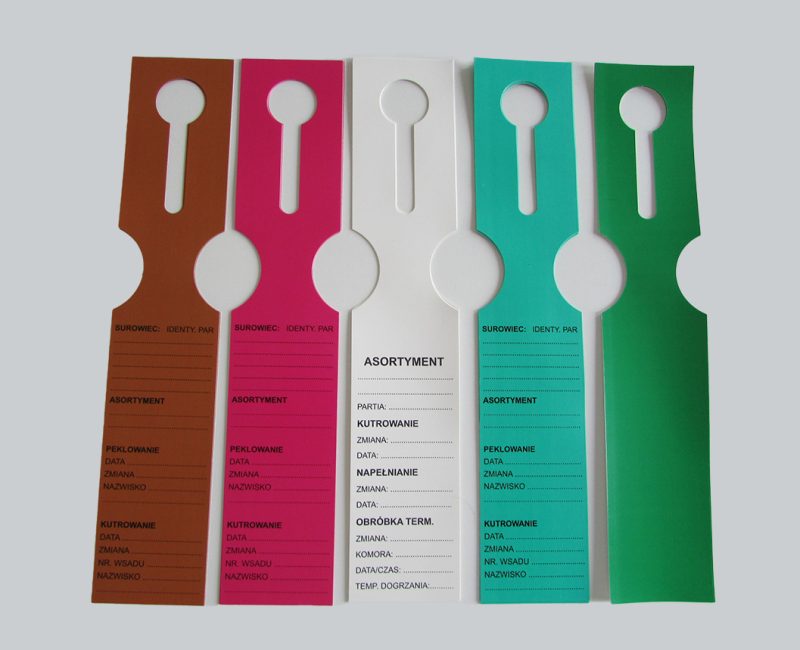
Permanent product labeling without the use of adhesive
Not every product can be effectively labeled with a self-adhesive label. Moisture, an uneven surface, or a lack of suitable space to apply the label may require a different solution. In such conditions, loop labels—tags attached without adhesive— prove to be effective. They are used, among other things, in meat processing, horticulture, nursery operations, and food packaging.
What are loop labels?
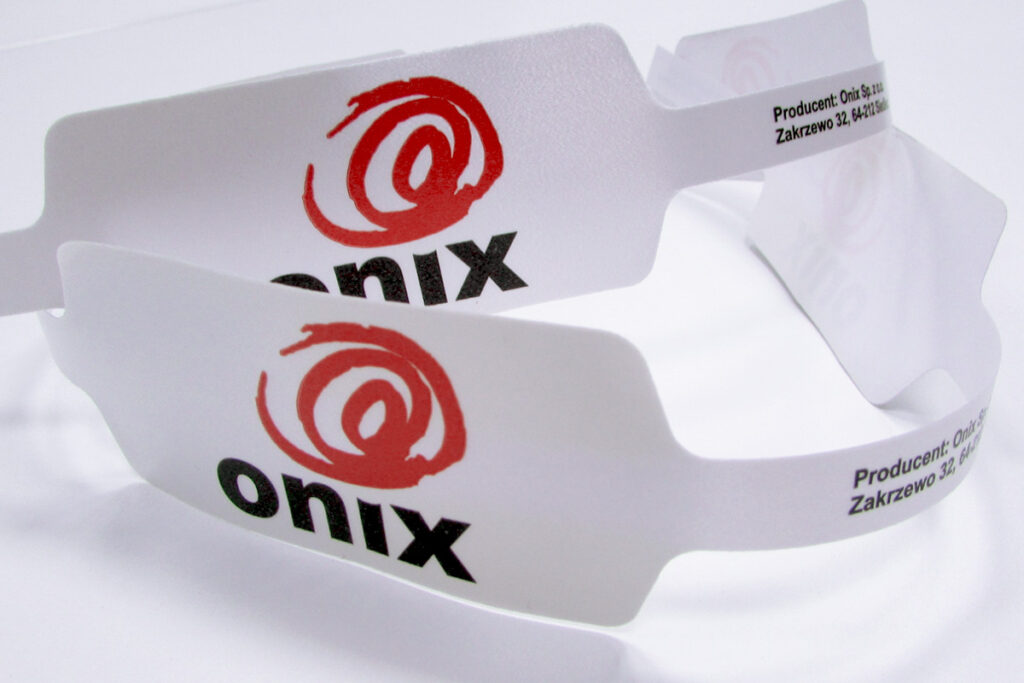
As we mentioned earlier, a loop label is a type of adhesive-free label. It usually takes the form of an elongated plastic strip. One end is threaded through a corresponding slit or hole, forming a loop around a product, package, handle, branch, or container.
The terms “loop label” and “tag” are sometimes used interchangeably, but tags constitute a broader category. They can also be attached using a string, fishing line, or a separate component. The loop label, on the other hand, has a unique design that allows it to be closed without any additional accessories.
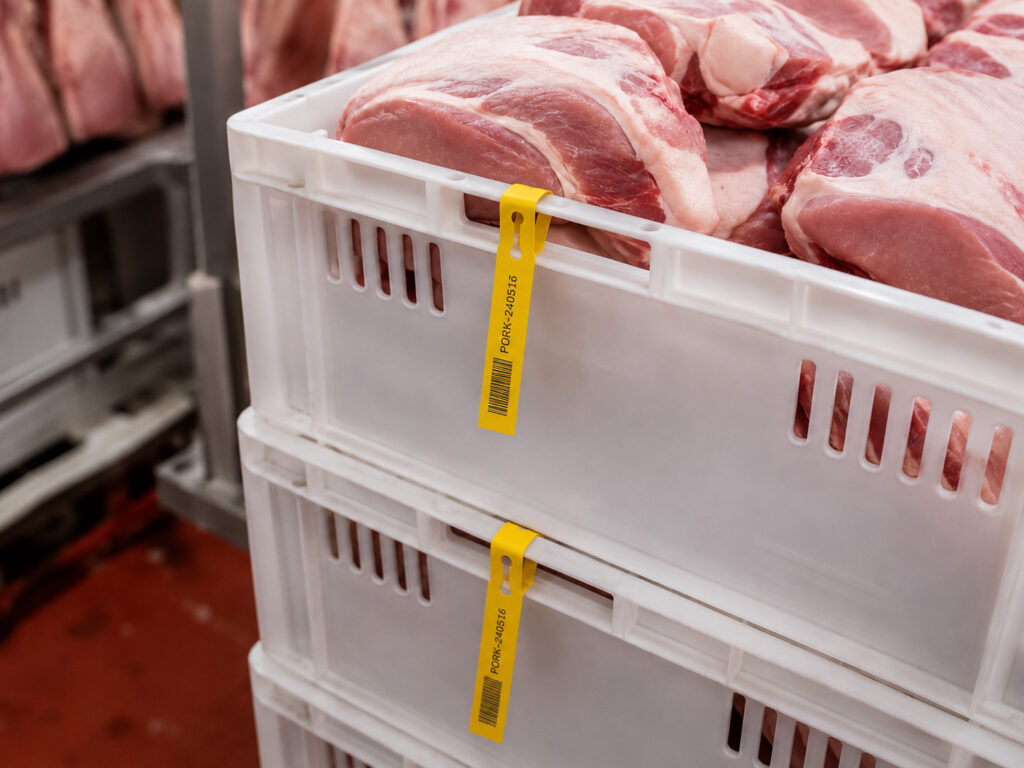
Loop Labels for Meat and Food Products
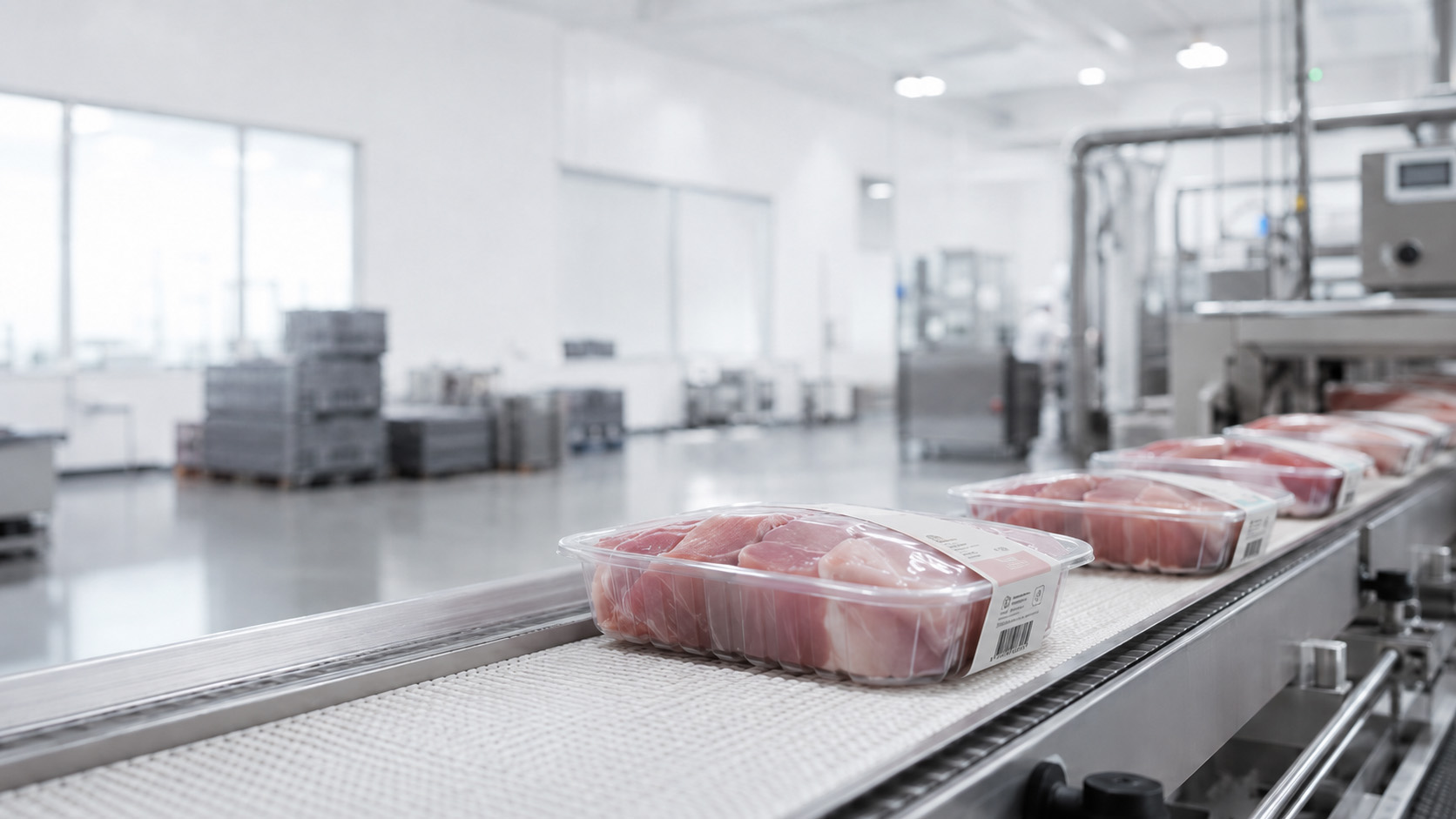
In the meat processing industry, loop labels can be used to identify meat batches, items suspended on hooks, containers, shipping crates, and bulk packaging. They allow for product identification in environments where surfaces are damp, cold, greasy, or irregular, and where the use of self-adhesive labels would be difficult.
The tag can include the product name, lot number, production date, expiration date, weight, barcode, 2D code, or other information required for production and logistics. The material and printing technology should be selected based on the conditions of use, temperature, and whether the label may come into contact with food.
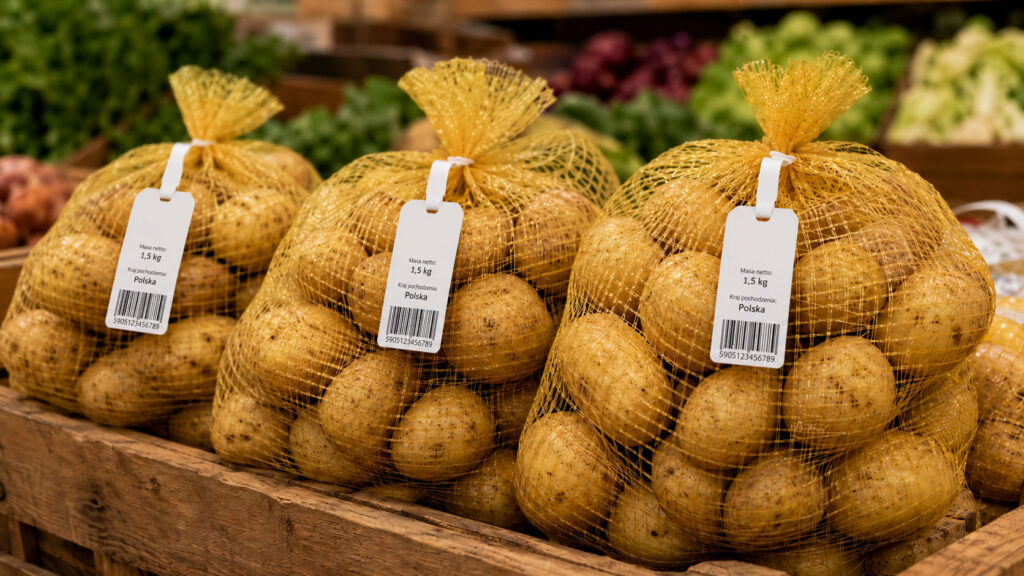
Loop labels can also be attached to bags and nets containing potatoes, onions, fruit, or other products. In such cases, they serve an identification, informational, and marketing purpose.
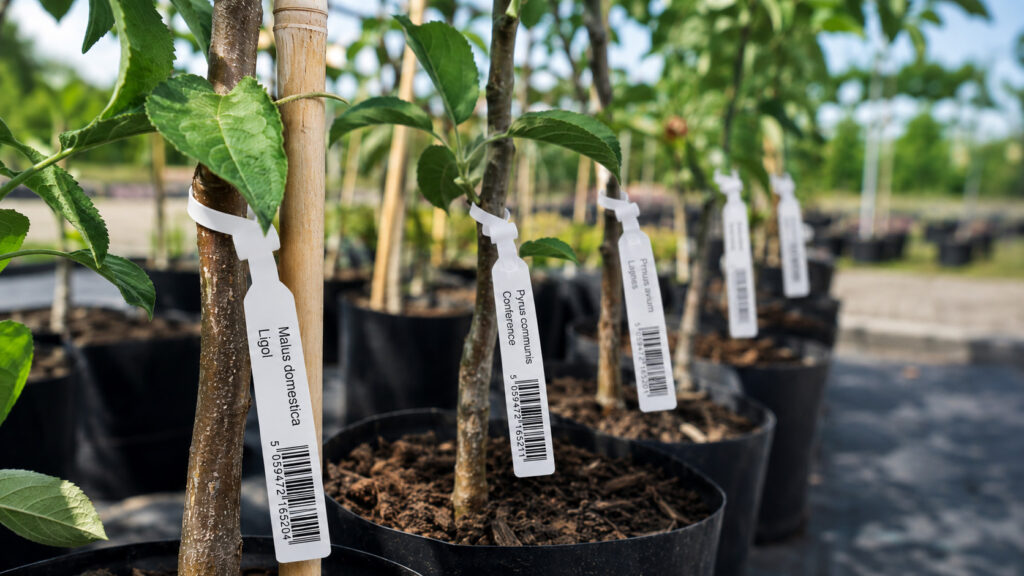
Loop Labels for Nurseries
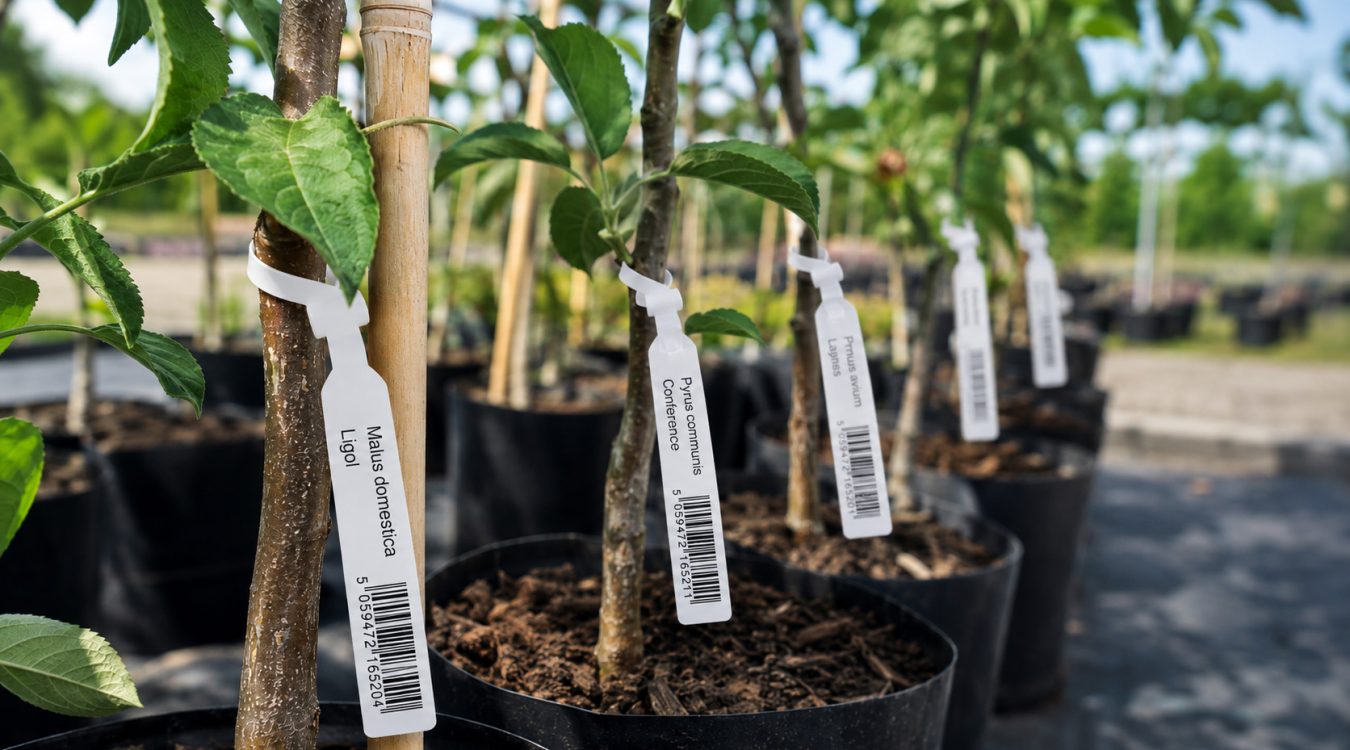
Another important area of application is plant nurseries, horticultural farms, and garden centers. The label can be attached to a branch, stem, pot, container, or package without having to glue it to the surface of the product.
Nursery labels include, among other things, the species and variety name, price, product code, barcode, care instructions, lot number, and the manufacturer’s logo. A properly selected material helps ensure that the labeling remains legible when exposed to water, temperature changes, and UV radiation.
What information can be printed on the label?
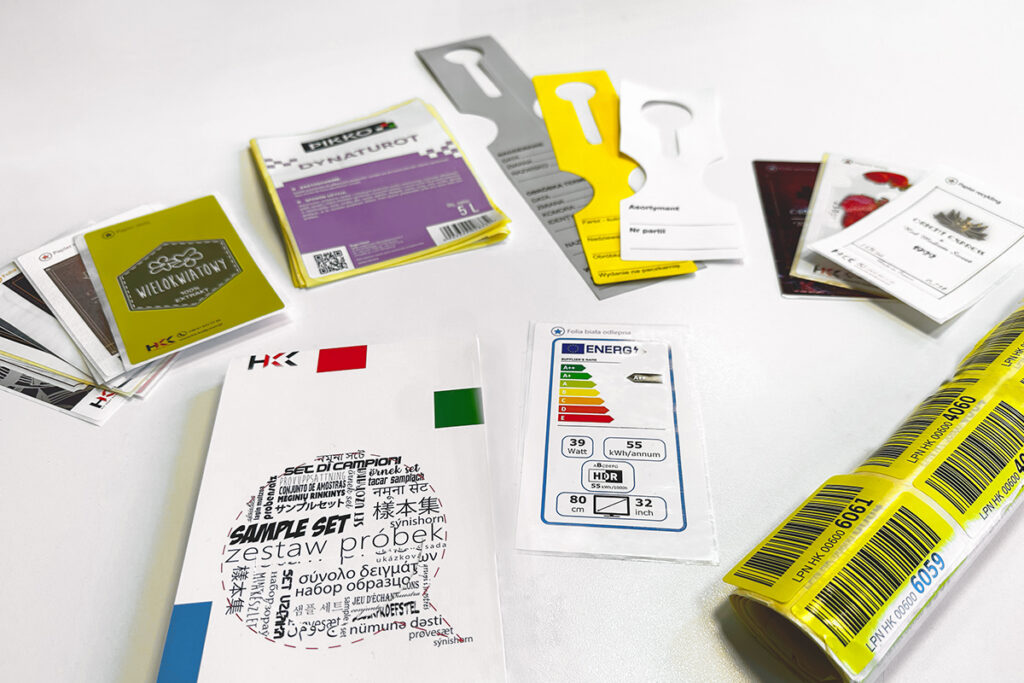
Loop labels can contain both fixed graphics and variable data (VDP labels). This means that within a single series, you can print different lot numbers, dates, barcodes, serial numbers, or product names.
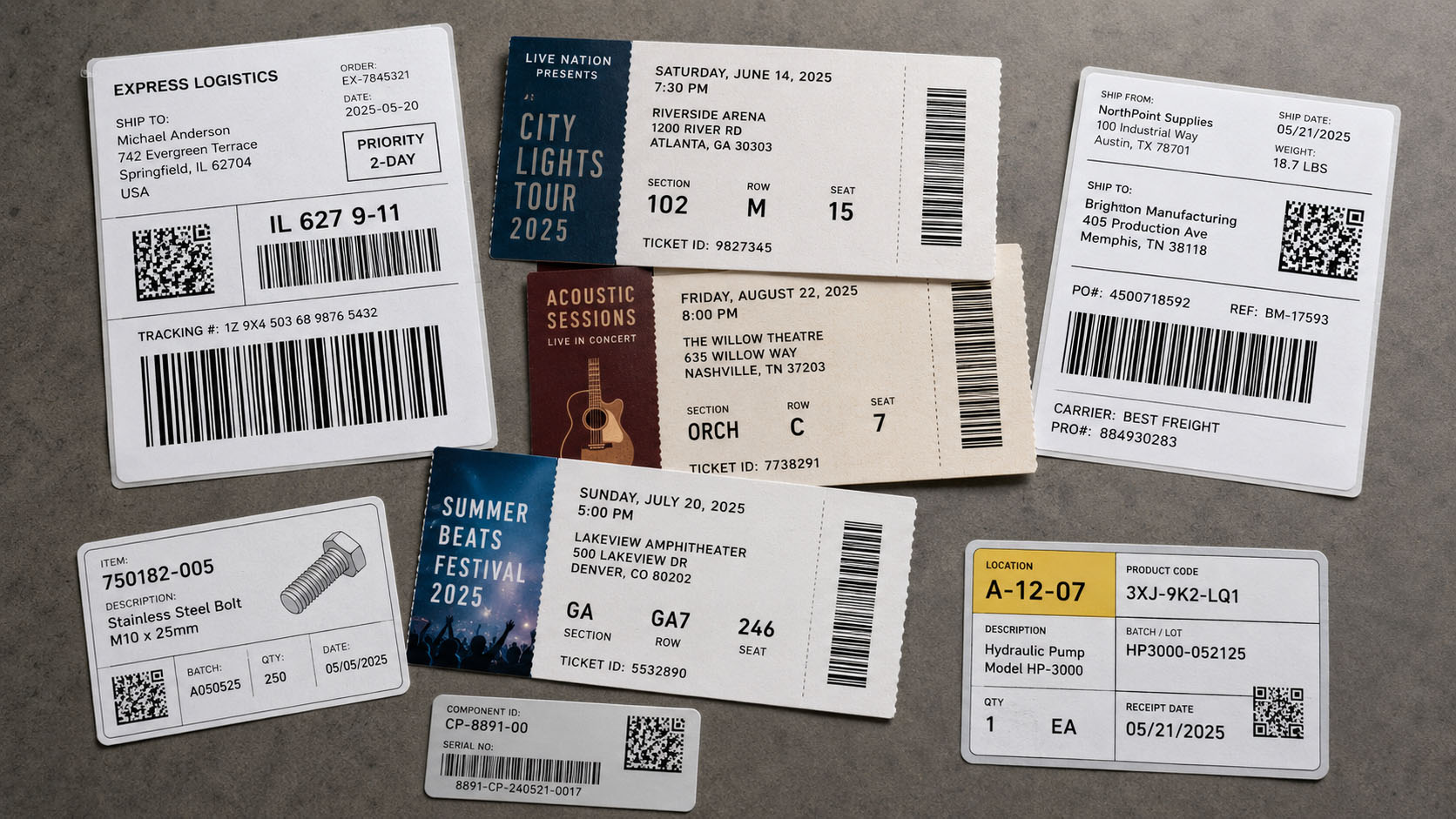
The label may include, among other things, the manufacturer’s logo and information, the product name, batch number, date, barcode, QR code or DataMatrix, price, weight, and instructions for use or care. A well-designed label supports automatic identification, product tracking, and the flow of information in warehouse logistics.
How do I choose loop labels?
Before placing an order , you should specify the location and method of attachment, the required print area size, storage conditions, and the scope of information. Other important factors include the material’s resistance, the durability of the print, the packaging method, and the ability to scan the codes using a barcode scanner or mobile terminal.
The requirements for a label used in a cold storage facility differ from those for a tag left outdoors for many months, and from those for a label placed on a shipping bag. The product specifications should therefore be based on the specific process.
Custom-made loop labels
At HKK Group, we manufacture loop labels tailored to the industry and the method of product labeling. We can prepare the appropriate format, material, graphic design, and printing of fixed or variable data, including barcodes and 2D codes.
Loop labels are part of a broader category of tags and adhesive-free labels. However, their design makes them particularly practical in situations where the label must be easy to attach, legible, and resistant to harsh conditions.