
Stickers - Barcode Labels
Barcode labels enable quick and unambiguous identification of products, packaging, and logistics units. Simply scanning the code links the physical item to the information stored in the sales, production, or inventory system. In many companies, there is no need to print such labels in-house—a more convenient solution is to order ready-made stickers with the code pre-printed, prepared for direct application.
HKK Group manufactures printed self-adhesive labels, tailoring their format, material, and delivery method to the specific application. We can produce barcode labels for both manual application and processes that use labeling equipment.

What are barcode labels?
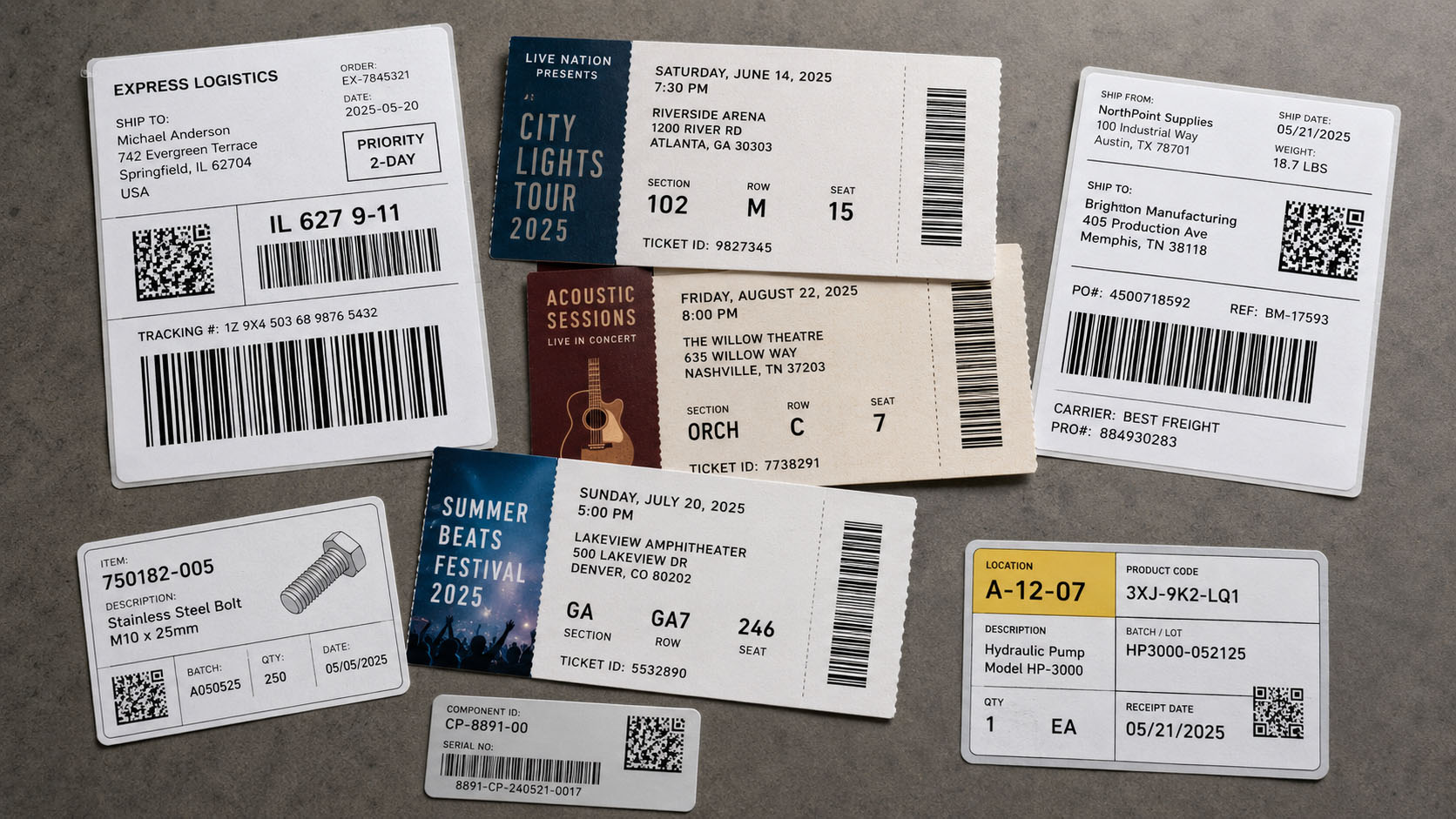
These are pre-printed self-adhesive labels that feature a code identifying a specific product, package, location, or other item. When the code is scanned, the device transmits the retrieved data to the appropriate system. The label itself does not need to contain all the information about the product—often, an identifier is sufficient for the system to find the correct record.
In practice, customers use various terms: barcode stickers, barcode labels, EAN labels, or simply identification labels. Regardless of the name, three factors are crucial: a correct code, a properly selected substrate, and consistent print quality.

Where are barcode labels used?
Pre-printed barcode labels are used wherever an item needs to be quickly identified without having to manually transcribe numbers. They are used, among other things, for:
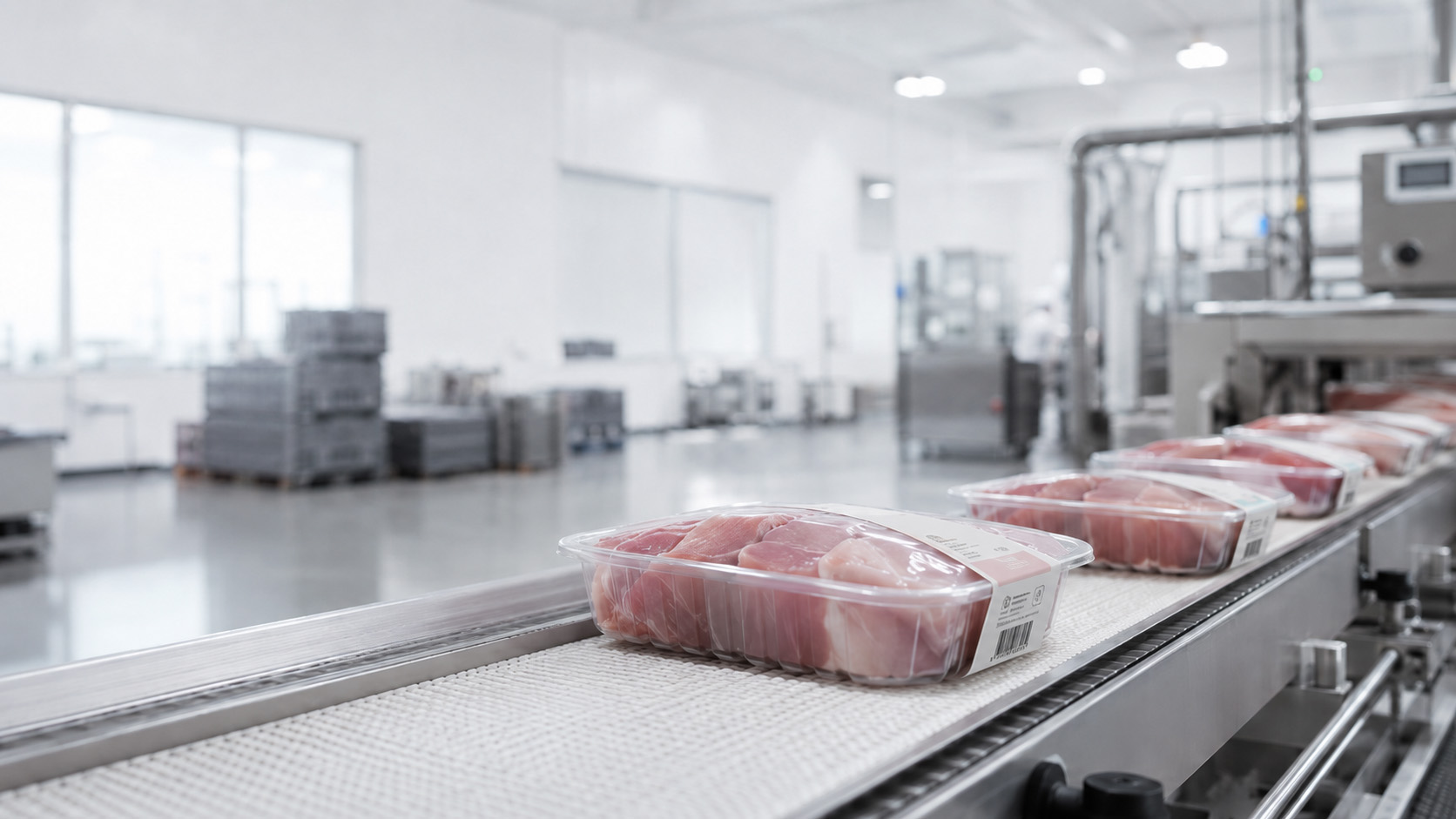
- In retail —to label products intended for sale and to identify the product range.
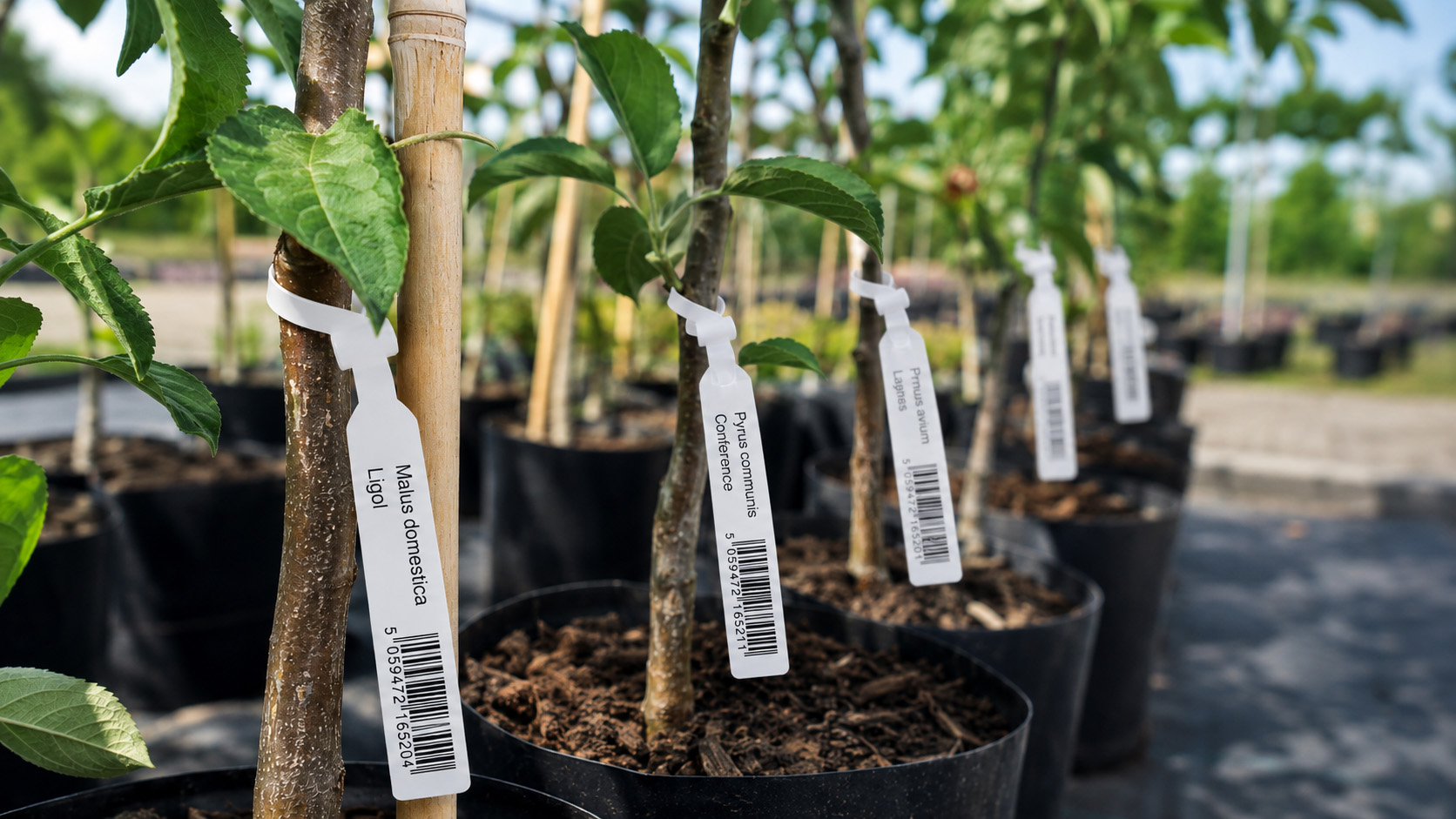
- In manufacturing —for marking components, packaging, batches, and finished goods.
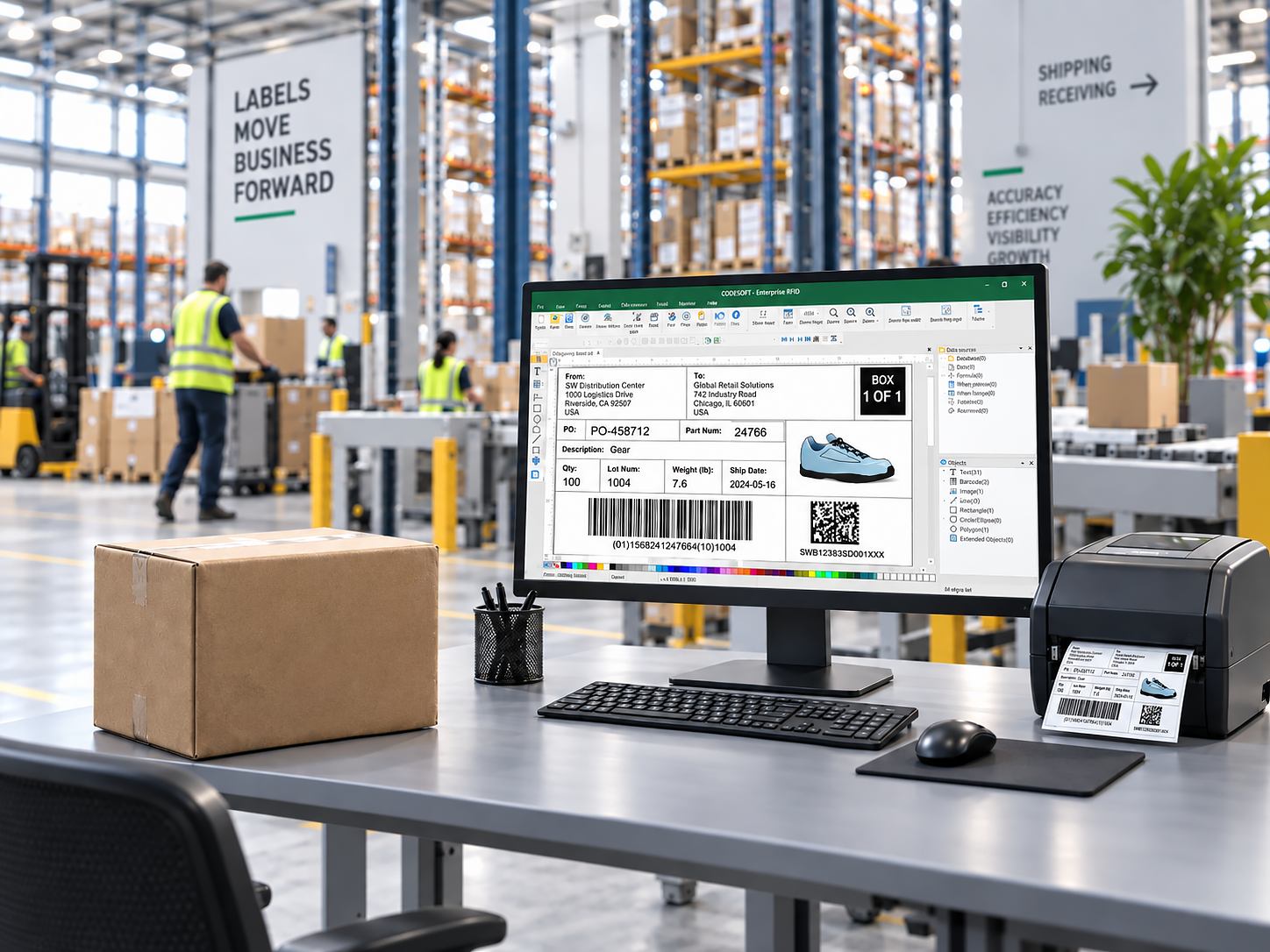
- In warehouses —to identify containers, boxes, storage units, and locations.
- In logistics —to label shipments, bulk packaging, and transport units.
- In e-commerce —to identify goods during order fulfillment, packaging, and returns processing.
In each of these situations, different label sizes, print durability, and adhesive types may be required. Therefore, it’s a good idea to start the ordering process by determining where the label will be applied and how it will be scanned.
What kinds of codes can be printed on labels?
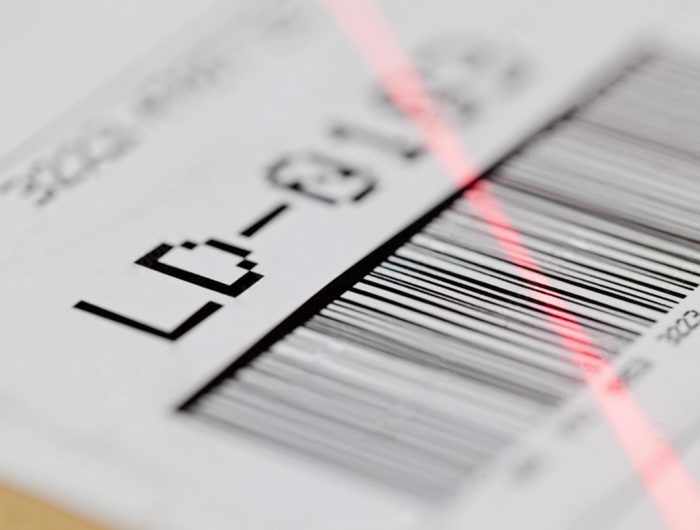
The type of printed code should be determined by the intended use of the label and the requirements of the system that will read the data. The most common solutions are:
- EAN-13 — commonly used on products sold in retail.
- Code 128 — used, among other things, for encoding identifiers in internal applications.
- GS1-128 — used in logistics to store data according to the GS1 standard, such as the SSCC (Single Shipment Control Code).
- QR and DataMatrix — two-dimensional codes used when data needs to be stored in a different format or within a limited space.
Code 128 and GS1-128 are not interchangeable terms: GS1-128 has a specific data structure and uses GS1 application identifiers. For labels intended for retail sale, it is also important to remember that printing an EAN code is not the same as assigning a GTIN. The identification number should come from the appropriate identification system and be provided for printing.
Labels with fixed and variable codes
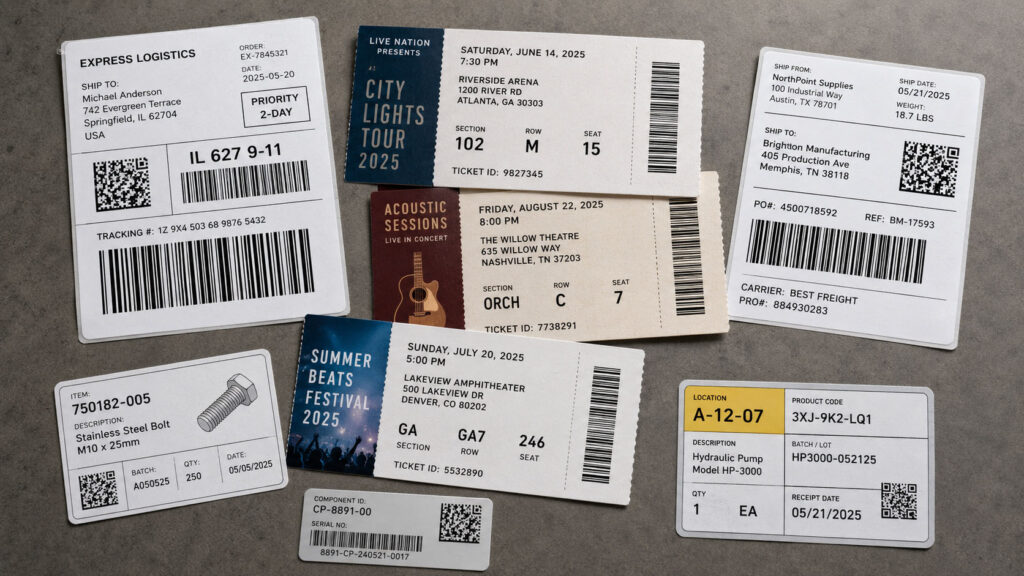
Not every order requires a unique code on each label. When a single series of labels is intended to identify the same product or location, a batch with a repeating code can be produced. This solution works well, for example, when labeling a specific product code or repetitive packaging.
However, if each label is to contain a different number, batch number, or individual identifier, variable data printing ( VDP) is used. HKK also fulfills such orders; we describe the principles of their preparation in more detail in the article “VDP Labels – Variable Data Labels.” For standard barcode labels, the most important consideration is determining whether the data should be repeated or vary from one label to the next.
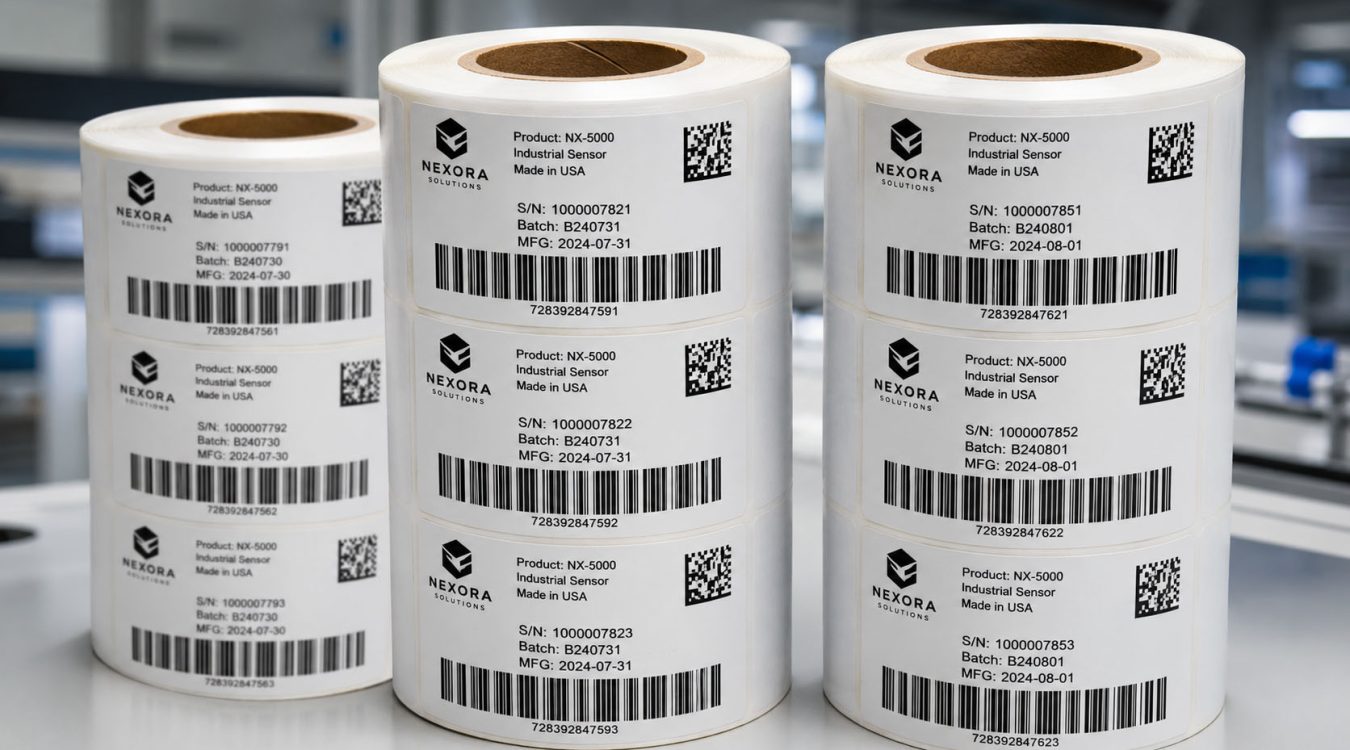
Barcode stickers on a roll
Barcode labels on a roll are a convenient solution for companies that regularly label large quantities of products and packaging. The roll makes it easier to store, dispense, and apply labels. It can be used for both manual application and, after proper preparation, in an automated process.
In roll production, factors such as label size, the spacing between consecutive labels, core diameter, winding direction, and the number of labels per roll are important. These parameters should be tailored to the intended use and any requirements of the application equipment. We discuss solutions for production lines in more detail in the article “Automatic Labeling—How to Implement a System?”
Depending on your needs, other methods of label preparation are also available. We discuss the topic of packaging separately in our article on the types of self-adhesive label delivery.
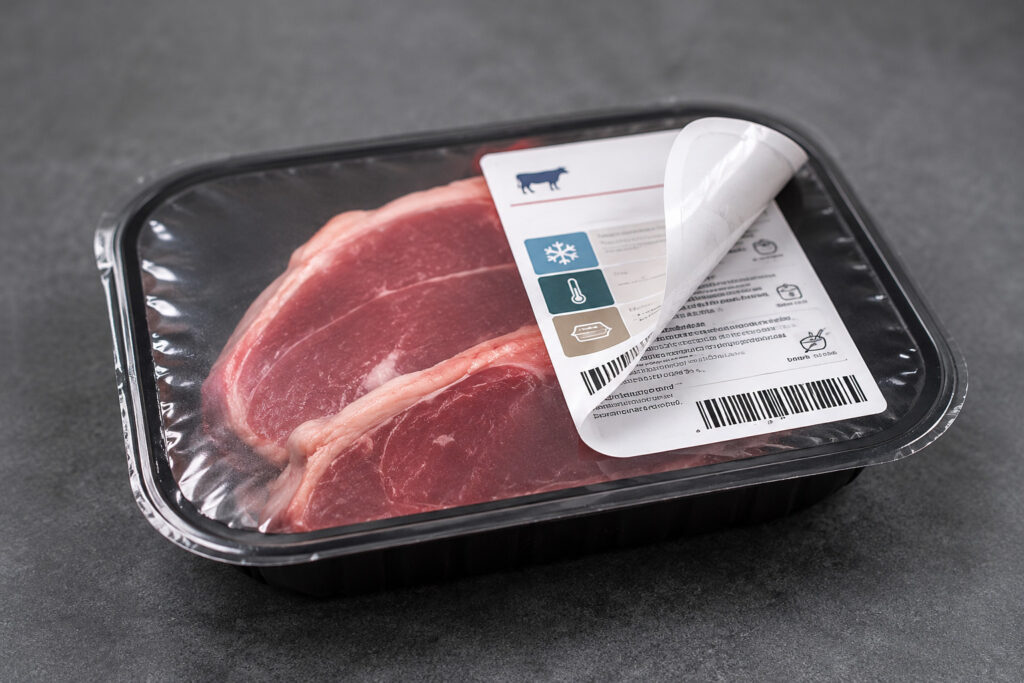
Material, adhesive, and sticker size
Whether a label remains legible and permanently attached to the packaging depends not only on the quality of the code itself. The material and adhesive are equally important. Paper labels work well in many standard applications, while film materials may be a better choice in cases of high humidity, the risk of abrasion, or more demanding conditions.
The choice of adhesive depends, among other things, on the type of surface, the application temperature, the expected service life, and whether the label will need to be removed later. Smooth cardboard may require one solution, plastic another, and packaging exposed to cold or moisture yet another.
The format is also important. A label that is too small may not accommodate the code with the required dimensions and appropriate margins, while one that is too large will be impractical on a small product. That is why at HKK, we treat the selection of material, size, and printing technology as part of the order preparation process, rather than simply choosing a ready-made template.
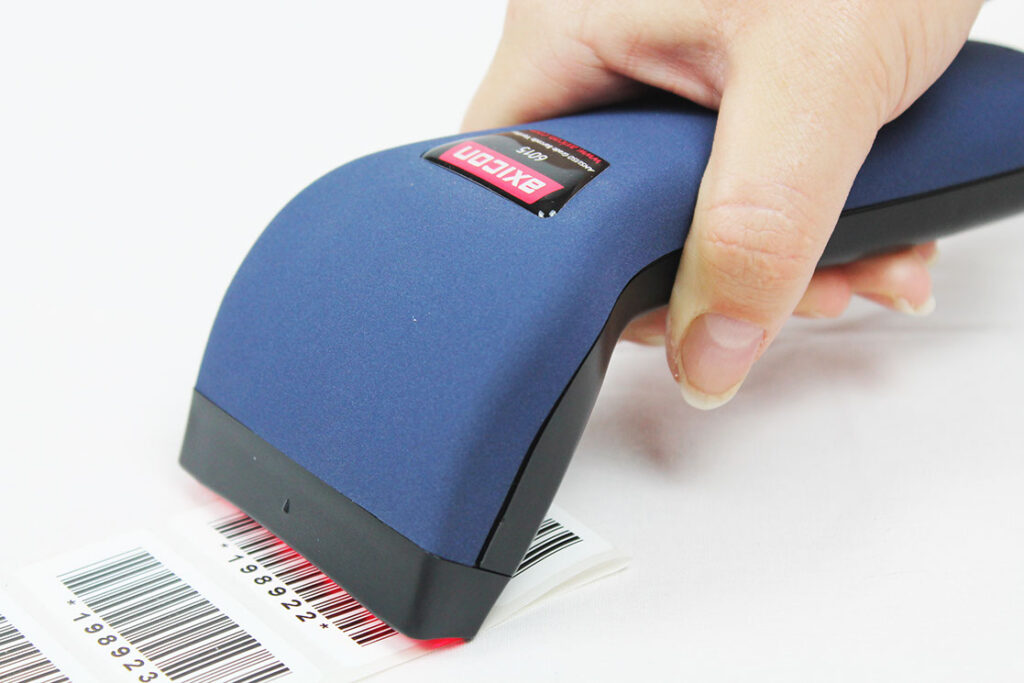
Readability of Barcodes on Labels
A barcode should be readable not only immediately after printing, but also under actual operating conditions. Factors affecting its readability include contrast, symbol dimensions, line edge quality, unprinted margins, and the surface on which the label is applied. The scanning method—manual or automatic—is also important.
If labels will be scanned on a high-speed production line or in a demanding environment, it’s important to define the barcode requirements well in advance. HKK combines printing expertise with expertise in automatic identification. We can advise on label preparation and, if necessary, on verifying the quality of barcodes and 2D codes.
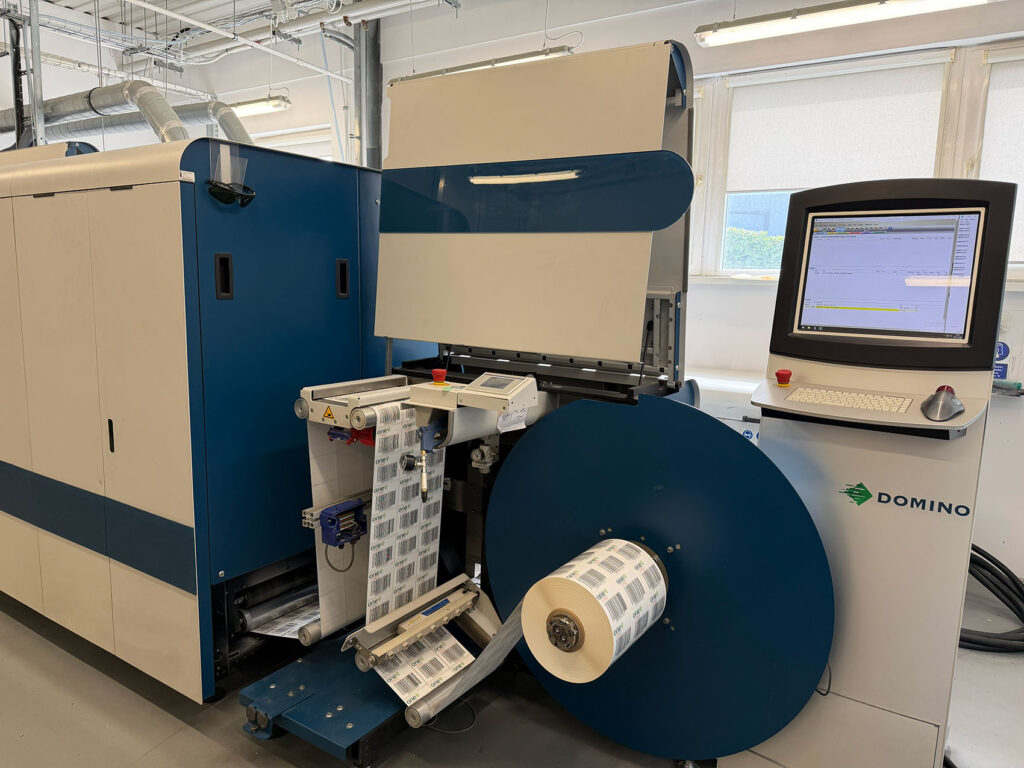
How do I order barcode labels?
To prepare a quote for printing barcode labels, please provide the following basic information:
- Code type and data — e.g., EAN-13, Code 128, or GS1-128; whether the code is fixed or variable.
- Label dimensions — expected format or dimensions of the available space.
- Application location —packaging material, storage conditions, and usage conditions.
- Print run —approximate quantity and information about repeat orders.
- Delivery format —on a roll, with winding specifications, or another preferred packaging method.
- Application and scanning method —manual or automated.
You don’t need to have a complete technical specification right away. Based on your application, we’ll help you determine the most important label parameters and develop a solution tailored to your company’s processes. Do you need ready-made barcode labels? Contact us and submit a request for a quote.